10 Best Differences Between Active and Passive LED Cooling?

Time:2026-06-16 Author:Sienna
0%

When exploring the world of LED technology, understanding thermal management is crucial. A critical aspect is discerning "What is the difference between active and passive LED cooling?" Industry expert Dr. Jane Thompson has stated, “Effective cooling systems can significantly extend LED lifespan and enhance performance." This highlights the importance of choosing the right cooling method.

Active cooling involves fans and complex systems. It requires power and maintenance but offers high efficiency. Passive cooling, on the other hand, utilizes heat sinks and natural convection. This method is simpler and energy-efficient but may be less effective in high-heat scenarios. Choosing between these options impacts both performance and longevity of LED products.

The debate persists on which system is superior. Many engineers favor active methods for high-demand applications. In contrast, passive cooling appeals to eco-conscious consumers due to its low energy use. As you explore these differences, consider your specific needs and the environment in which the LED technology will be used. Balancing performance with sustainability remains a vital conversation in the industry.
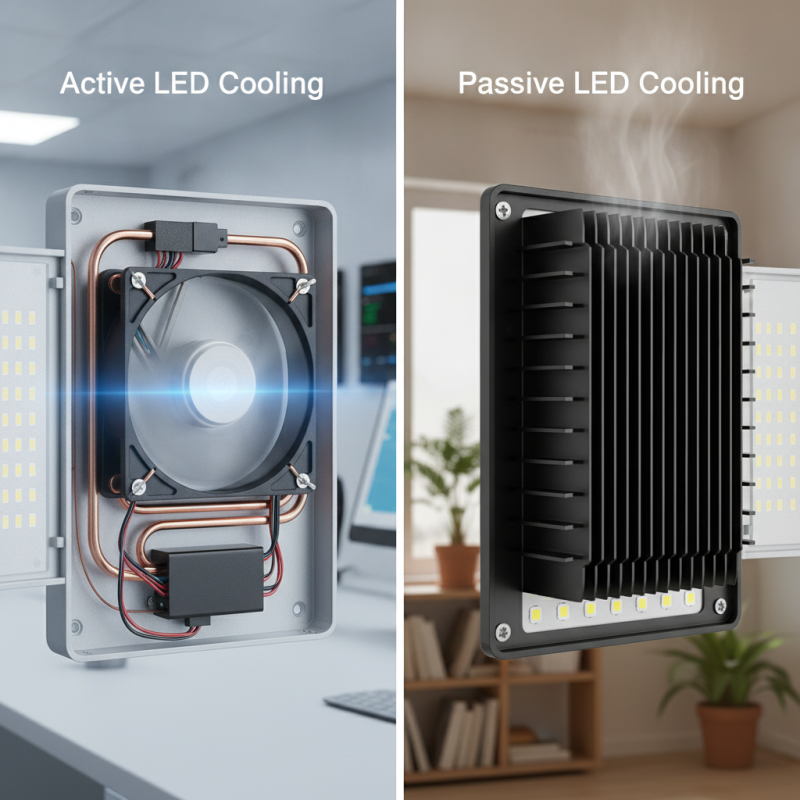
10 Best Differences Between Active and Passive LED Cooling?

Active LED Cooling: Definition and Mechanism Explained

Active LED cooling is a vital technology in managing heat in LED applications. It relies on mechanical components to dissipate heat efficiently. Typically, fans or pumps are used in this method. This active approach allows for better temperature control. As a result, it enhances the lifespan and performance of LED lights. No heat means no dimming, which is crucial for many settings.

In contrast to passive cooling, which relies solely on heat sinks and natural convection, active cooling requires careful design. Balancing airflow and noise is essential. While more effective, the complexity can lead to potential points of failure. For instance, a malfunctioning fan can cause overheating. This highlights a significant consideration for users choosing active systems.

Dependable operation is key in any application. Active cooling systems are often preferred in industrial settings where performance is critical. However, they need regular maintenance. Dust can accumulate on fans over time, reducing efficiency. Users should be proactive in upkeep. Regular checks and cleanings can prevent irreversible damage to the fixtures.

Passive LED Cooling: Definition and Mechanism Explained

Passive LED cooling refers to methods that dissipate heat without mechanical assistance. This approach relies on natural convection and conduction to manage heat. Unlike active cooling systems, passive designs have no moving parts, leading to quieter operations.

In passive systems, heat sinks play a crucial role. They absorb heat generated by LEDs and disperse it into the surrounding air. The effectiveness of a heat sink depends on its material, size, and design. Common materials like aluminum are often chosen for their excellent thermal conductivity. This mechanism can effectively reduce the temperature of LEDs, enhancing their lifespan and performance.

However, passive cooling isn't without limitations. It is often less effective in high-heat environments where airflow is restricted. In some cases, heat sinks may become overwhelmed, leading to thermal buildup. Designers must carefully consider these factors when implementing passive cooling. Balancing efficiency and design is a challenge that requires ongoing evaluation.

Key Advantages of Active LED Cooling Compared to Passive Solutions

Active LED cooling solutions offer distinct advantages over passive options. With active cooling, heat generated by LEDs is efficiently managed using fans or other mechanical means. This results in enhanced reliability and extended lifespan for the lighting systems. Passive cooling relies on heat sinks and natural convection, often leading to insufficient cooling in high-output environments.

One significant benefit of active cooling is improved thermal regulation. By actively removing heat, these systems maintain optimal operating temperatures. This leads to brighter, more consistent light output, which is crucial for applications like outdoor signage or photography. In contrast, passive solutions may face significant performance declines as temperatures rise.

Tip: When considering LED cooling solutions, think about the environment and usage. If high heat is a concern, opt for active cooling. However, remember active systems can require more maintenance. Evaluate your specific needs before making a choice. Whether passive or active, both methods require consideration of energy efficiency and heat management. Understanding these differences can guide you in selecting the best system for your application.

Common Applications of Active vs. Passive LED Cooling Technologies

Active and passive LED cooling technologies serve distinct purposes depending on application needs. Active cooling systems utilize fans or pumps to enhance heat dissipation. These systems are common in high-power LED applications, such as industrial lighting and video displays, where thermal management is critical. They maintain optimal performance and prevent overheating.

Passive cooling, on the other hand, relies on heat sinks and conduction to dissipate heat. This method is prevalent in residential lighting and small electronic devices. It is simpler and often quieter. However, passive systems can struggle under higher thermal loads.

Tips: Consider the lifespan of your LED products. Active cooling may extend performance in demanding situations, but it can fail if not monitored. Regular maintenance is key. On the contrary, passive cooling systems are easy to install, yet their efficiency can diminish in confined spaces. Be mindful of the environment when choosing cooling solutions.

10 Best Differences Between Active and Passive LED Cooling

Feature Active LED Cooling Passive LED Cooling
Cooling Method Uses fans or pumps Relies on natural convection
Efficiency Higher efficiency in cooling Less effective at high power
Cost Generally more expensive More economical
Maintenance Requires periodic maintenance Low maintenance
Design Complexity More complex design Simpler and compact design
Size Typically larger due to components Usually smaller and lighter
Lifespan Potentially shorter lifespan due to moving parts Longer lifespan with no moving parts
Noise Level Can generate noise Generally silent operation
Cooling Capacity Higher cooling capacity Limited cooling capacity
Application Scope Used in high-performance applications Common in standard lighting solutions

Cost Considerations and Energy Efficiency in LED Cooling Methods

When comparing active and passive LED cooling methods, cost considerations play a significant role. Active cooling systems often involve fans or liquid cooling solutions. These systems tend to have higher initial costs due to the additional components. However, they can offer better thermal management. This is crucial for high-performance applications. Investing more upfront can lead to long-term savings through improved energy efficiency.

On the other hand, passive cooling methods use heat sinks or natural convection. They are generally less expensive to install and maintain. While they may struggle in high-heat environments, their simplicity makes them appealing. For some users, the choice may come down to installation costs versus potential energy savings. Not every situation requires elaborate cooling solutions. Sometimes, a basic approach is sufficient, especially for low-power applications. Balancing upfront costs with long-term energy efficiency is a critical aspect to consider in LED cooling methods.

FAQS

: What is passive LED cooling?

: Passive LED cooling dissipates heat without mechanical assistance using natural convection and conduction.

How do heat sinks function in passive cooling?

Heat sinks absorb heat from LEDs and disperse it into the surrounding air. Their effectiveness varies with size and design.

What materials are typically used for heat sinks?

Common materials include aluminum, known for its excellent thermal conductivity and lightweight properties.

What are the limitations of passive cooling systems?

Passive systems struggle in high-heat environments and may experience thermal buildup if airflow is inadequate.

How do active cooling systems differ from passive systems?

Active systems use fans or pumps for heat dissipation, suitable for high-power applications, while passive systems rely on heat sinks.

Why is regular maintenance important for active cooling systems?

Active systems can fail if not monitored, thus consistent maintenance is critical to ensure optimal performance.

Are passive cooling systems easy to install?

Yes, passive systems are generally straightforward to install, making them appealing for residential lighting.

What might influence the choice between active and passive cooling?

Installation costs and potential energy savings can greatly influence the choice, depending on specific application needs.

Can passive cooling handle high thermal loads effectively?

No, passive cooling often struggles under high thermal loads and may not be sufficient in confined spaces.

What should users consider when selecting cooling solutions?

Users must balance costs, environmental factors, and the cooling needs of their specific LED applications.

Conclusion

The article titled "10 Best Differences Between Active and Passive LED Cooling" delves into the fundamental distinctions between these two cooling methods employed in LED technology. Active LED cooling involves mechanical systems such as fans or pumps that actively remove heat, enhancing thermal management in high-performance applications. In contrast, passive LED cooling relies on natural convection and heat sinks to dissipate heat without the use of additional energy-consuming components.

To answer the question, "What is the difference between active and passive LED cooling?" the article highlights key advantages of active systems, including superior cooling efficiency and better performance in high-temperature environments. However, passive systems also offer benefits such as lower energy consumption and reduced maintenance requirements. The article also discusses the common applications for both cooling methods, alongside cost considerations and energy efficiency to provide a comprehensive understanding of how each approach plays a role in LED technology.

Sienna

Sienna

Sienna is a skilled marketing professional with a deep expertise in our company’s core products and services. With a passion for innovation and detail, she plays a pivotal role in crafting insightful blog posts that not only highlight the unique features of our offerings but also provide valuable......