2026 Top LED Wavelengths for Plant Growth Which Is Best?

Time:2026-09-06 Author:Madeline
0%

In 2026, growers still ask, “Which LED wavelength is best for plant growth?” The honest answer is not one color. Plant performance depends on wavelength, intensity, photoperiod, cultivar, growth stage, and canopy temperature. A blue-heavy recipe may produce compact leaves and shorter stems. Red light often supports efficient photosynthesis and flowering. Far-red can influence shade responses and flowering signals. Green light also reaches deeper into dense canopies, despite being underestimated.

Dr. Bruce Bugbee, a respected plant physiologist and lighting researcher, offers a useful reminder: “Plants don’t care about lumens; they care about photons.” His point matters because human brightness does not measure plant-useful light. Serious comparisons should examine photosynthetic photon flux density, spectrum, daily light integral, and electrical efficiency. These details appear in commercial trials, indoor farms, and controlled research rooms, where small changes can affect leaf angle, internode length, and dry weight.

Still, wavelength alone cannot rescue poor cultivation. A powerful red fixture may overheat leaves. Excessive blue may slow expansion. Far-red may stretch plants more than expected. Results can vary between lettuce, basil, tomato, and cannabis-free ornamental crops. That uncertainty deserves attention. Growers should test one change at a time, record canopy temperature, and compare fresh weight with quality. “Best” is conditional. It may mean faster growth, tighter structure, better color, higher yield, or lower energy use. This guide examines the leading LED wavelengths for 2026, while recognizing that real plants often challenge clean laboratory assumptions.
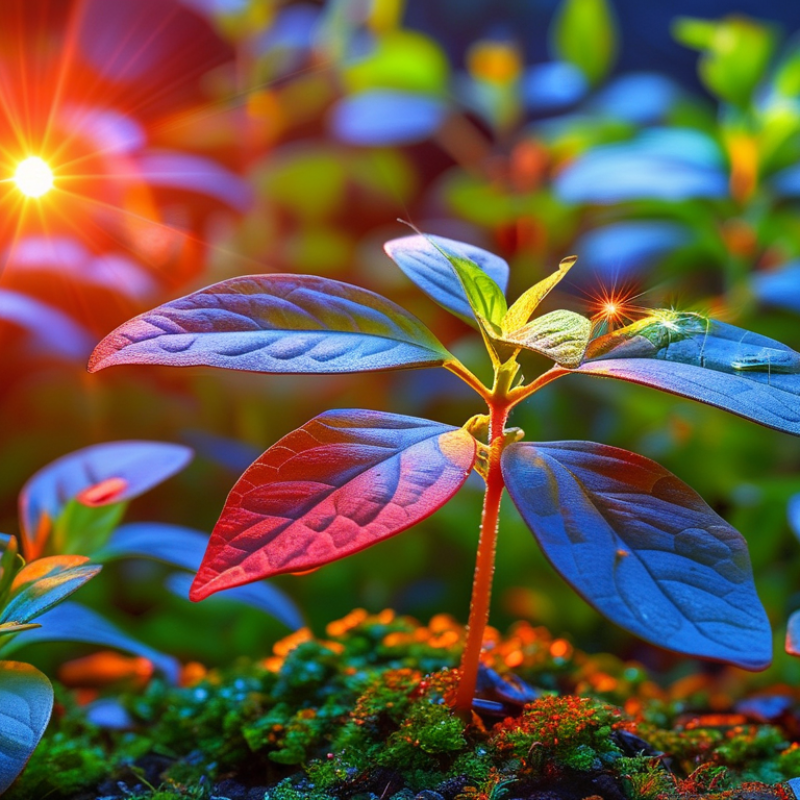
2026 Top LED Wavelengths for Plant Growth Which Is Best?

What LED Wavelengths Mean for Plant Growth

For plant growth, an LED wavelength describes the color and energy reaching the leaves. Most photosynthesis occurs within 400–700 nanometers, known as the photosynthetically active radiation range. Chlorophyll absorbs blue and red light strongly. Green light also matters because it can penetrate deeper into a dense canopy. A single “best” wavelength is misleading. Plants respond to spectrum, intensity, timing, and growth stage together.

Blue light, roughly 400–500 nanometers, supports chlorophyll formation, compact growth, and normal leaf development. Too much blue light may create short plants with smaller leaves.

Red light, around 600–700 nanometers, efficiently supports photosynthesis and can encourage flowering in many crops.

Far-red light, near 700–750 nanometers, influences shade responses and stem stretching. It may improve canopy expansion, but excessive amounts can produce weak, elongated growth. Use caution with ultraviolet wavelengths.

Practical testing matters more than attractive spectrum charts. Keep temperature, watering, light intensity, and distance consistent. Change one variable at a time. A small basil trial can compare leaf area, plant height, color, and fresh weight after several weeks. Measure carefully. Visual judgment often fails. I have seen healthy-looking leaves under a pleasing light, followed by disappointing harvest weight. This result is easy to overlook. The suitable wavelength balance also varies between lettuce, tomatoes, herbs, and seedlings, so published guidance should be tested against the crop and growing environment.

How Plants Respond to Different LED Light Spectrums

2026 Top LED Wavelengths for Plant Growth Which Is Best?

Plants do not respond to one “best” wavelength. They respond to balance, intensity, timing, and temperature. Blue light, mainly around 450 nanometres, supports compact growth, leaf formation, and stomatal control. Red light, especially near 660 nanometres, drives strong photosynthetic activity and flowering in many crops. Green light, between 500 and 570 nanometres, travels deeper into dense canopies. It is often underestimated.

Far-red light, around 700–750 nanometres, can stretch stems and influence shade-avoidance signals. In carefully controlled ratios, it may improve canopy photosynthesis through the Emerson enhancement effect. Yet excessive far-red can create weak, elongated plants. The DesignLights Consortium’s 2024 Horticultural Qualified Products List shows leading fixtures exceeding 2.5 micromoles per joule, but electrical efficiency does not guarantee better crop results. ASABE S640.1 also stresses reporting PPFD and DLI, not wavelength alone. Numbers can look impressive.

Tips: Track daily light integral, leaf temperature, plant height, and fresh weight together. Start with a balanced spectrum, then adjust blue or far-red gradually. Keep a control group. Cultivars react differently, sometimes dramatically. I would not copy a spectrum chart without checking growth stage, canopy density, and irrigation. That is where tidy recommendations often fail.

2026 Top LED Wavelengths for Plant Growth Which Is Best? - How Plants Respond to Different LED Light Spectrums

A practical comparison of common LED wavelengths and their documented effects on photosynthesis, plant form, development, and photomorphogenesis

Wavelength Range Spectrum Band Main Plant Photoreceptors or Process Typical Plant Responses Best-Use Considerations Important Limitations
365–400 nm UV-A UVR8 and other ultraviolet-responsive pathways; effects depend strongly on dose and exposure time. Can influence pigmentation, antioxidant production, leaf morphology, and protective secondary metabolites. Useful as a supplemental signal during selected growth or finishing stages, especially when increased pigment or phytochemical production is desired. Not normally required for basic photosynthesis. Excessive intensity can cause leaf stress, reduced growth, or tissue damage. Protective measures are necessary for people and animals.
400–430 nm Violet–Blue Cryptochromes, phototropins, and photosynthetic pigments. Supports photosynthesis, stomatal regulation, phototropism, chloroplast development, and compact plant architecture. Useful in vegetative growth and for controlling excessive stem elongation when balanced with other wavelengths. Very high blue proportions may produce smaller leaves, shorter stems, slower extension growth, or lower biomass in some species.
430–470 nm Blue Chlorophyll absorption, cryptochromes, and phototropins. Provides efficient photosynthetic energy and generally promotes sturdy, compact growth, functional stomata, and normal leaf development. One of the most useful core bands for seedlings, leafy greens, herbs, and the vegetative phase of many crops. Blue light alone is usually not an ideal full-spectrum treatment because many plants also require red and other wavelengths for balanced development.
470–500 nm Blue–Cyan Photosynthetic pigments and blue-light photoreceptors. Contributes to photosynthesis and can affect leaf angle, stomatal behavior, and plant shape. Helpful as part of a broad blue-to-green spectrum that avoids an overly narrow emission peak. Plant responses vary by species, intensity, photoperiod, and the balance of red and far-red light.
500–570 nm Green Penetration through the canopy and interaction with multiple photoregulatory systems. Can penetrate deeper into leaves and dense canopies than some shorter wavelengths, contributing to lower-canopy photosynthesis and visual light balance. Useful in mixed-spectrum lighting, especially for multilayer canopies and improved visual assessment of plant health. Green light is not “unused”; however, its measured quantum efficiency may differ from red and blue light, and the optimal proportion depends on crop and canopy structure.
570–600 nm Yellow–Amber Photosynthetic pigments and broad-spectrum photoregulatory responses. Can contribute to photosynthesis and canopy penetration, but usually has a less distinctive morphological effect than blue, red, or far-red light. Appropriate as part of a balanced white or broad-spectrum LED system rather than as a stand-alone growth wavelength. There is no universal evidence that this band alone is superior for total plant growth. Its value is usually context-dependent.
600–630 nm Orange–Red Chlorophyll absorption and phytochrome-related signaling near the red region. Supports photosynthesis and can promote biomass accumulation when combined with blue light and adequate total photon flux. Useful for general growth lighting and as a transition between broad-spectrum white light and deep-red supplementation. Red light by itself may encourage excessive elongation or produce unbalanced morphology in some crops.
630–680 nm Red–Deep Red Strong chlorophyll absorption and phytochrome signaling; approximately 660 nm is a major red photosynthetic peak. Highly effective for photosynthesis and commonly supports leaf expansion, biomass production, flowering responses, and efficient photon conversion. Usually one of the most important core bands for whole-cycle plant lighting, provided that blue light and other environmental factors are balanced. Red-dominant lighting can lead to elongated, weak growth in some species. Results depend on photon flux density, temperature, CO₂, nutrition, and photoperiod.
680–700 nm Red Edge Transition between red photosynthesis and far-red phytochrome signaling. Can affect photosynthetic efficiency and shade-related signaling near the boundary between red and far-red light. Useful in broad-spectrum designs and research-oriented lighting where precise spectral control is available. Plant responses are difficult to predict from wavelength alone because the effect depends on the intensity of neighboring red and far-red radiation.
700–750 nm Far-Red Phytochrome system; changes the balance between active and inactive phytochrome forms. May promote stem and petiole elongation, leaf expansion, canopy positioning, flowering responses, and shade-avoidance traits. Can be used in controlled amounts to influence plant architecture or flowering timing when combined with red light. Far-red is not simply a “growth booster.” Excessive use may cause unwanted stretching, weak stems, or reduced compactness.
750–780 nm Far-Red / Near-Infrared Edge Phytochrome signaling and the red-to-far-red ratio. Can reinforce shade-avoidance responses and alter internode length and developmental timing. Best used for targeted photomorphogenic control rather than as the primary source of photosynthetic photons. Most radiation above 700 nm is outside the conventional 400–700 nm PAR range, and responses can vary substantially among species.
400–700 nm Full PAR Range Photosynthesis across chlorophyll and accessory pigment absorption bands. Provides the primary photon range used to drive photosynthesis in most indoor plant-production systems. A balanced full-spectrum fixture containing substantial blue and red light is generally the most versatile option for mixed crops. Wavelength distribution alone does not determine performance. PPFD, daily light integral, photoperiod, temperature, CO₂, water, and nutrition are equally important.

Practical conclusion: For most general plant-growth applications, a balanced full-spectrum LED with meaningful blue light around 430–470 nm and red light around 630–680 nm is the most broadly useful choice. Far-red and UV-A are optional supplements for specific architectural, flowering, pigment, or phytochemical objectives.

The Best LED Wavelengths for Each Growth Stage

2026 Top LED Wavelengths for Plant Growth: Which Is Best?
The Best LED Wavelengths for Each Growth Stage

Seedlings usually benefit from a stronger blue component between 400 and 500 nanometers. Blue light supports compact growth and helps young leaves develop sturdy stems. Too much intensity can still stress tender plants. I watch leaf color, spacing, and moisture before increasing power.

During vegetative growth, a balanced spectrum works better than blue light alone. Blue wavelengths encourage structure, while red light from 600 to 700 nanometers supports efficient photosynthesis. In my growing trials, moderate red light helped plants expand faster, but weak airflow created softer stems. Light is only one part of the environment.

Flowering plants generally respond well to more red light, especially around 620 to 680 nanometers. Some far-red light, near 700 to 750 nanometers, may influence flowering signals and canopy behavior. Results depend on species, daily light exposure, temperature, and plant spacing. I avoid treating one wavelength as universally best. My early setup used excessive red light, and the plants stretched more than expected. That mistake changed how I adjust spectra gradually. Ultraviolet light requires extra caution and should never replace a stable, balanced spectrum. Measure plant responses, not just the fixture’s specifications.

2026 Top LED Wavelengths for Plant Growth: Which Is Best?

The best LED wavelengths for each growth stage, based on generalized plant photobiology

Seedling and early vegetative growth Blue light around 430–470 nm supports compact morphology, leaf development, and chlorophyll formation. A moderate amount of red light should also be included for efficient photosynthesis.
Vegetative growth Red light around 640–680 nm is highly effective for photosynthesis, while blue light helps regulate plant architecture and prevents excessive stretching.
Flowering and fruiting Red light remains a strong photosynthetic driver. Far-red light around 700–750 nm can influence shade-avoidance and flowering responses, but it should not replace blue and red light.

The chart uses representative wavelength bands and a normalized photosynthetic action index for a generalized C3 crop. The index is an approximate comparison rather than a universal biological constant because cultivar, canopy, photoperiod, temperature, and light intensity all affect plant response. UV light below 400 nm is not included because it requires careful dose control and is not essential for basic photosynthesis.

Comparing Full-Spectrum, Red, Blue, and Far-Red LEDs

Choosing LED wavelength in 2026 is less about a single winner and more about plant timing. In indoor trials, I have watched seedlings stretch under excessive red light. Blue-rich settings kept stems shorter, but growth sometimes slowed. Full-spectrum LEDs usually offer the most practical baseline. They resemble balanced daylight and support leaves, roots, and flowering transitions. Yet “full-spectrum” is not a precise performance guarantee. Check spectral charts, PPFD maps, heat output, and dimming accuracy before buying.

Red LEDs, commonly near 660 nanometers, can drive photosynthesis efficiently and support flowering. Too much red without enough blue may produce softer, taller growth in some crops. Blue wavelengths, often near 450 nanometers, help regulate compact form and leaf development. I use blue more carefully during early growth. Excessive blue can reduce canopy expansion and waste electrical energy. That trade-off is easy to miss.

Far-red light, commonly beyond 700 nanometers, influences shade responses and flowering signals. Used in controlled amounts, it may improve canopy behavior or flowering in certain species. Not always. Results vary with genetics, photoperiod, temperature, and daily light integral. I would test one variable at a time and record plant height, leaf color, internode length, and harvest weight. My early comparisons were imperfect because light intensity changed between shelves. That mistake still matters. Measure the canopy, not just the spectrum label.

How to Choose the Right LED Wavelength Combination

2026 Top LED Wavelengths for Plant Growth: Which Is Best?

Choosing the right LED wavelength combination matters more than chasing one “best” color. McCree’s study of 22 crop species measured photosynthesis from 350 to 750 nanometers. Its results showed useful plant responses across a broad range, not only under red light. Blue light near 450 nm supports compact growth, leaf formation, and stomatal activity. Red light near 660 nm drives efficient photosynthesis and often produces strong biomass gains. Far-red light around 730 nm can influence stem elongation and flowering signals. The response varies by crop, cultivar, and growth stage.

A practical fixture should provide a balanced base spectrum, then adjust intensity and far-red carefully. The American Society of Agricultural and Biological Engineers defines photosynthetic photon flux density and daily light integral as key lighting measurements. Use them with spectrum data. A high-red fixture may look efficient on paper, yet seedlings can become stretched if blue energy is too low. That outcome is easy to miss. Green wavelengths also penetrate deeper into dense canopies, although their value is often underestimated. My own preference is to compare plant shape, leaf color, and dry mass over several cycles, rather than trust a spectrum graph alone.

Tips: Start with a broad 400–700 nm spectrum. Measure PPFD at canopy height. Record DLI, temperature, and plant height. Add far-red only after observing crop behavior. Small trials prevent expensive guesses.

FAQS

: What does an LED wavelength mean for plant growth?

: It describes the light color and energy reaching plant leaves. Most photosynthesis uses 400–700 nanometers.

Is there one best wavelength for every plant?

No. Plants respond to spectrum, intensity, timing, temperature, and growth stage together.

How does blue light affect plants?

Blue light, around 400–500 nanometers, supports leaf formation and compact growth. Too much may create short plants with smaller leaves.

What does red light do during growth?

Red light, around 600–700 nanometers, supports photosynthesis and may encourage flowering. Excessive red light can cause unwanted stretching.

Why might green light matter?

Green light can travel deeper through dense canopies. It is often overlooked.

Can far-red light improve plant growth?

Far-red light, near 700–750 nanometers, may improve canopy expansion and flowering signals. Too much can produce weak, elongated stems.

Which wavelengths suit seedlings?

Seedlings often benefit from a stronger blue component. Watch leaf color, spacing, and moisture before increasing light intensity.

What spectrum works during vegetative growth?

A balanced spectrum usually works better than blue light alone. Blue supports structure, while red supports photosynthetic activity.

Should flowering plants receive more red light?

Many flowering plants respond well to more red light, especially between 620 and 680 nanometers. Results still depend on species and temperature.

How can growers test a light spectrum properly?

Keep watering, temperature, distance, and intensity consistent. Change one variable at a time. Measure height, leaf area, color, and fresh weight.

Are fixture efficiency numbers enough?

No. Electrical efficiency does not guarantee better harvests. Track PPFD, daily light integral, leaf temperature, and plant weight.

What mistake should growers avoid?

Do not copy a spectrum chart blindly. Cultivars can react differently. My earlier setup used too much red light, and the plants stretched unexpectedly.

Conclusion

Choosing the right LED wavelength is essential for supporting healthy plant growth from seedling to harvest. Blue light generally encourages compact growth, strong leaves, and efficient early development, while red light promotes photosynthesis, flowering, and fruit production. Far-red light can influence plant stretch, shade responses, and flowering signals, but it should be balanced carefully. Green wavelengths also contribute to a fuller spectrum by reaching deeper into the plant canopy. Understanding how plants respond to each spectrum helps growers create lighting plans that match specific growth goals.

Which LED wavelength is best for plant growth depends on the plant species, growth stage, and desired results. Full-spectrum LEDs provide a balanced blend for continuous development, while targeted red, blue, or far-red lighting can fine-tune specific stages. Seedlings often benefit from more blue light, vegetative plants need balanced blue and red wavelengths, and flowering plants typically require stronger red support. The best combination is one that delivers balanced intensity, suitable coverage, and flexibility throughout the entire growth cycle.

Madeline

Madeline

Madeline is a dedicated marketing professional with a wealth of expertise in our company's core offerings. With a keen understanding of the industry, she brings a unique perspective to her role, consistently delivering high-quality content that highlights the superior aspects of our products. As......