In the fast-evolving landscape of industrial lighting, understanding how to select an LED driver for industrial lighting becomes crucial. The General Services Administration (GSA) reports that LED technologies can reduce energy consumption by up to 75% compared to traditional lighting systems. Yet, with numerous options available, businesses often face confusion and uncertainty. The right LED driver is vital for optimal performance and efficiency.
Selecting an effective LED driver is not merely a technical decision but also a strategic one. Factors such as compatibility with existing systems, dimming capabilities, and voltage requirements significantly impact the overall effectiveness of industrial lighting solutions. A 2022 report by the U.S. Department of Energy emphasizes that selecting inappropriate drivers can lead to inefficiencies, resulting in energy waste and increased operational costs. It's clear that informed choices are necessary, but they often require careful consideration of specifications and potential pitfalls.
Many industrial facilities overlook the importance of driver selection. They may choose based on superficial factors such as cost. However, the long-term implications can be profound. An effective driver supports not only energy savings but also enhances product lifespan and overall performance. Understanding how to select an LED driver for industrial lighting could very well define a facility's operational success in the competitive market.
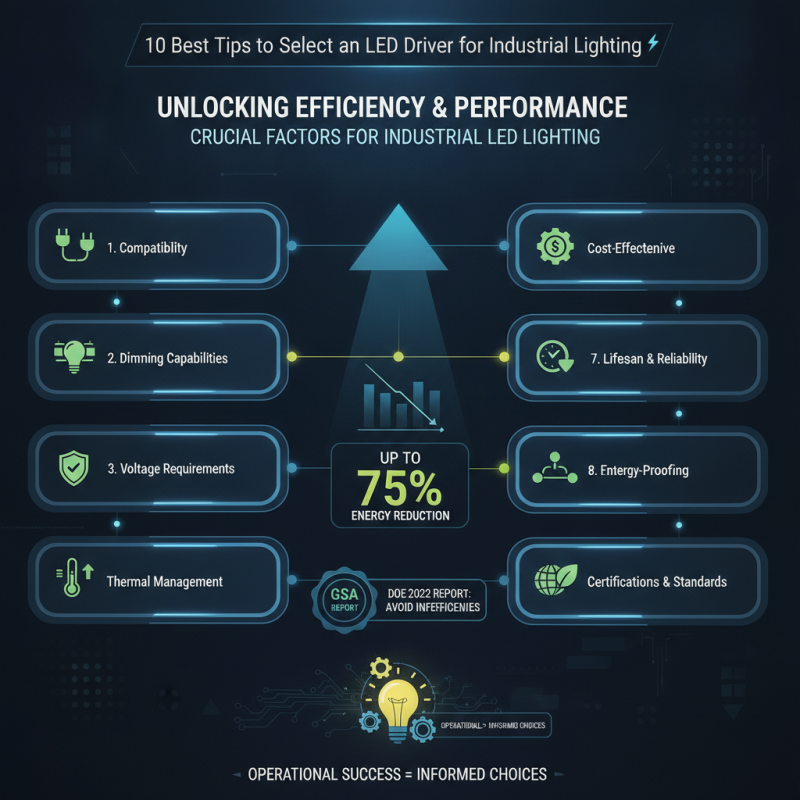
LED drivers play a critical role in industrial lighting systems. These components manage power and ensure the longevity of LED lights. Poorly chosen drivers can lead to inefficiencies or early failures. According to a report by the Department of Energy, up to 30% of LED failures can be traced back to inadequate drivers. This highlights the importance of selecting the right driver for your application.
When choosing an LED driver, consider the wattage requirements of your fixtures. This will prevent under-powering or over-powering your lights. Additionally, check the dimming capabilities. A driver with versatile dimming options can enhance energy efficiency. Explore adjustable current settings as they allow for flexibility in varied lighting needs.
Look for drivers with robust thermal management features. Heat can significantly shorten the lifespan of LEDs. Research indicates that 90% of LED lifetime issues stem from overheating. Therefore, effective thermal management is vital for operational efficiency. Remember, not all drivers are created equal. Selecting the right one requires thorough research and sometimes trial and error.
| Tip No. | Tip Description | Reason |
|---|---|---|
| 1 | Determine the power requirements | Ensures compatibility and prevents under or overloading. |
| 2 | Consider the output voltage | Matches LED specifications for optimal performance. |
| 3 | Check for dimming capabilities | Allows for energy savings and better control of lighting levels. |
| 4 | Evaluate efficiency ratings | Higher efficiency reduces energy costs and heat output. |
| 5 | Look for certification and standard compliance | Ensures safety and reliability in industrial applications. |
| 6 | Assess thermal management solutions | Improves longevity and performance of the LED driver. |
| 7 | Consider size and mounting options | Ensures fit within existing lighting fixtures or setups. |
| 8 | Review lifetime and warranty period | Indicates reliability and potential maintenance costs. |
| 9 | Check for features like surge protection | Protects against voltage spikes and enhances durability. |
| 10 | Research user reviews and feedback | Offers insight into real-world performance and reliability. |
: Evaluate power factor and total harmonic distortion (THD) for efficiency.
A high power factor means less wasted energy. This reduces operational costs significantly.
Aim for a power factor above 0.9. Lower values can increase electricity bills.
THD affects equipment performance. A THD below 10% is recommended for optimal operation.
Consider whether you'll use high-output fixtures or simple lighting. Requirements can vary greatly.
The right driver balances initial costs with long-term savings, which are crucial for budgeting.
Lower energy bills from efficient drivers can save money over time, despite higher upfront costs.
Assess initial costs against potential maintenance and energy expenses for a true financial picture.
Yes, regular maintenance reduces costly repairs and prolongs the lifespan of the driver.
A low-cost driver may lead to more outages, negating any initial savings in the long run.
When considering how to select an LED driver for industrial lighting, it is crucial to understand the vital role that LED drivers play in these systems. Key specifications such as voltage, current, and wattage need thorough evaluation to ensure compatibility with existing setups. Additionally, efficiency ratings, including power factor and total harmonic distortion, are essential for maintaining energy efficiency and reducing operational costs.
Furthermore, the ability to integrate with dimming options and control systems is significant in enhancing lighting performance and adaptability in various industrial settings. Ultimately, a cost-effective selection balances the initial investment with potential long-term savings, ensuring that the chosen LED driver meets both the immediate and future lighting needs of the facility.

 Zever Light