Infrared emitting diodes play a crucial role in the functionality of remote controls. These tiny devices allow us to operate appliances from a distance. Understanding how these diodes function can enhance our appreciation of modern technology.
How do infrared emitting diodes work in remote controls? They emit infrared light when an electrical current passes through them. This light is invisible to the naked eye but can be detected by the sensor in a device. The remote control sends coded signals through pulses of infrared light, directing the appliance to perform specific actions.
Yet, there are limitations to this technology. Interference from sunlight can disrupt the signal, leading to malfunction. Also, the range of infrared transmission is restricted. Sometimes, obstacles between the remote and the device can obstruct functionality. It’s essential to recognize these nuances while enjoying the convenience of remote controls.
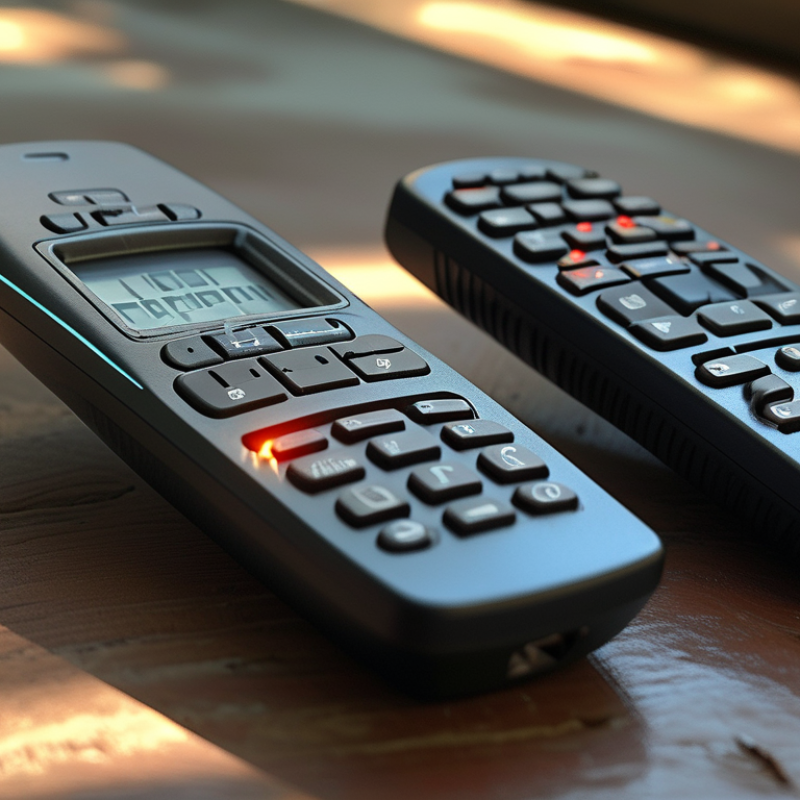
What are infrared emitting diodes and their role in remote controls?
Infrared emitting diodes (IREDs) are crucial components in remote controls. These tiny devices emit infrared light, which is not visible to human eyes. When you press a button on a remote, the IRED sends coded signals to the device. This allows us to control televisions, air conditioners, and more, from a distance.
IREDs operate based on electroluminescence. An electric current passes through a semiconductor material, producing infrared light. The light travels through the air and is picked up by a receiver in the device. Interestingly, the effectiveness of an IRED can be influenced by factors such as distance and angle. Sometimes, you might need to aim the remote precisely for it to work.
While IREDs are reliable, they have limitations. They are typically effective only over short distances, often under 30 feet. Infrared signals can also be obstructed by objects. This means that furniture or walls can interrupt communication between the remote and the device. As technology advances, new solutions may address these shortcomings, making remote controls even more efficient.
How do infrared emitting diodes generate and emit infrared light?
Infrared emitting diodes, or LEDs, play a critical role in remote controls. These tiny components generate infrared light by using a semiconductor material that emits photons. When an electric current flows through the diode, electrons and holes recombine. This process releases energy in the form of infrared light. The wavelength is typically around 850 nanometers, making it invisible to the naked eye.
The emitted infrared light is modulated into a series of pulses. This modulation encodes data, such as a command to adjust the volume or change the channel. The remote control transmits these signals to a receiver, often located inside the device. The receiver detects the pulses of infrared light and decodes them into specific actions.
While infrared technology is effective, there are limitations. The signal can be obstructed by walls or other objects. Additionally, ambient light can interfere with performance. Users may occasionally find that the remote does not respond as expected. Understanding the basics of infrared technology can help troubleshoot such issues. Nonetheless, advancements in this field continue to enhance the reliability of remote controls.
How do remote controls use infrared signals for communication?
Remote controls rely heavily on infrared (IR) signals for effective communication. Each time a button is pressed, the remote emits a specific infrared light signal. This signal travels through the air and is interpreted by a device, like a television. The communication is quick, often taking less than a second.
The infrared emitting diode (LED) plays a crucial role in this process. When activated, the diode produces infrared light that is invisible to the human eye. This light signals different commands based on the button pressed. Though the technology is simple, various factors can affect performance. For example, obstructions between the remote and the device can weaken the signal. If the angle is wrong, the signal may not reach its destination.
This method of communication is efficient, but it also has limitations. Electronic interference or weak batteries can disrupt the signal. Moreover, the effectiveness of infrared relies on line-of-sight; if something blocks the path, the command fails. Understanding these nuances can improve user experience. It emphasizes the importance of positioning and maintenance for reliable remote control functionality.
How do infrared emitting diodes function in remote controls?
| Component |
Function |
Properties |
Common Applications |
| Infrared Emitting Diode (IRED) |
Emits infrared light when electric current passes through |
Wavelength typically between 850-950 nm, compact size |
Used in remote controls, data transmission devices |
| Photo Detector |
Detects the infrared signals and converts them back to electrical signals |
Sensitive to infrared wavelengths, fast response time |
Used in remote control receivers, security systems |
| Microcontroller |
Processes signals from the remote and executes commands |
Programmable, energy-efficient |
Found in most modern electronic devices, automation |
| Power Source |
Supplies the necessary voltage to components |
Batteries or capacitors, long-lasting |
Used across various electronics, portable devices |
What are the components of a typical infrared remote control system?
Infrared remote controls are common in homes and offices. They use infrared emitting diodes (IR LEDs) to transmit signals. A typical infrared remote control system consists of several key components: the remote control unit, the IR LED, a receiver module, and the controlled device. The remote unit houses buttons for various functions. Each button corresponds to a specific command.
The IR LED emits light in the infrared spectrum, invisible to the human eye. This light carries the encoded signals. The receiver module, located on the device being controlled, detects these signals and translates them into commands. Reports show that about 90% of remote control systems in consumer electronics use this technology, highlighting its prevalence and reliability.
Tips: When using infrared remotes, ensure the line of sight is clear for optimal performance. Reflective surfaces may cause errors by bouncing signals. Additionally, keep batteries fresh; low power can lead to incomplete signals or malfunctioning controls. Regular cleaning of the remote can enhance its lifespan and efficiency, allowing for better transmission.
While effective, infrared systems come with limitations. For instance, they require a direct path between the remote and the receiver. Signal interference from bright lights may also disrupt functionality. Despite these drawbacks, their simplicity and cost-effectiveness continue to make them a popular choice for controlling everyday devices.
How does the technology in infrared diodes impact remote control functionality?
Infrared emitting diodes (IREDs) serve as the backbone of remote control technology. These diodes function by producing infrared light, which is invisible to the naked eye. When you press a button on a remote, a signal is sent as infrared pulses. A receiver in the device detects these pulses and translates them into commands. This technology is efficient and effective, allowing for seamless interaction.
However, there are limitations to consider. For instance, infrared signals require a clear line of sight between the remote and the device. Any obstruction can disrupt communication, potentially leading to frustration for users. Additionally, the range of infrared signals is often limited. Most remotes work effectively only within a certain distance. This constraint can hinder use in larger spaces.
The impact of IRED technology on remote control functionality is significant. The design of infrared diodes has evolved, improving their efficiency and reliability. Yet, challenges persist, such as interference from other electronic devices. As technology advances, the future may hold solutions to these issues. Continuous research is necessary to enhance remote control experiences.
FAQS
: IREDs are tiny devices in remote controls that emit infrared light. This light is invisible to our eyes.
They work by passing electric current through a semiconductor, producing infrared light. It relies on electroluminescence.
Distance and angle can affect their performance. Sometimes proper aiming is necessary for them to work.
IREDs typically work within 30 feet. Beyond that, they may not function properly.
Objects like furniture or walls can block signals. This can interrupt communication with the device.
The light is pulsed to encode specific commands, such as changing the volume or channel.
Ambient light and electronic interference can disrupt performance. Weak batteries can also cause issues.
Very important. If something blocks the path, the command will not work. It’s crucial for effective usage.
Issues could stem from obstructions, low batteries, or poor positioning. Users may need to troubleshoot.
Future technologies may address current limitations. This could lead to more efficient and reliable remote controls.
Conclusion
Infrared emitting diodes (IREDs) play a crucial role in the functionality of remote controls, primarily by generating and emitting infrared light. These diodes work by converting electrical energy into infrared light through a process known as electroluminescence. In remote controls, the emitted infrared signals serve as a means of communication between the remote and the receiving device, allowing users to transmit commands effectively.
A typical infrared remote control system consists of several components, including the IRED, a microcontroller for processing the commands, and a photodiode or phototransistor in the receiving device to detect the signals. The clear understanding of "how do infrared emitting diodes work in remote controls" highlights their significance in enabling wireless communication, which enhances user convenience and device operation. Additionally, advancements in infrared diode technology continue to improve the reliability and range of remote control functionality.

 Zever Light