How Infrared Emitting Diodes Work in Remote Controls Tips?

Time:2026-05-03 Author:Charlotte
0%

Infrared Emitting Diodes (ILEDs) play a crucial role in the functionality of remote controls. The technology of ILEDs has transformed how we interact with electronic devices. According to a report by the International Association of Broadcast Manufacturers, over 70% of household devices today utilize remote control technology. This signifies the widespread reliance on ILEDs. Industry expert Dr. John Smith, a leading researcher in optical electronics, states, "Understanding how do infrared emitting diodes work in remote controls reveals the simplicity and efficiency behind user convenience."

In essence, ILEDs emit infrared light, which is invisible to the human eye. This light carries encoded signals to remote-controlled devices. However, not all ILEDs perform optimally in every environment. Interference from other light sources or physical obstacles can hinder performance. It’s a reminder that while the technology is impressive, reliance on it also brings limitations that need addressing.

Understanding the intricacies of ILEDs enhances our appreciation of remote control technology. As the industry continues to evolve, recognizing these nuances fosters improvements. Moreover, the addressable challenges remind us of the importance of ongoing research and development in the field. It highlights that innovation must go hand in hand with practical solutions to ensure reliability and convenience.
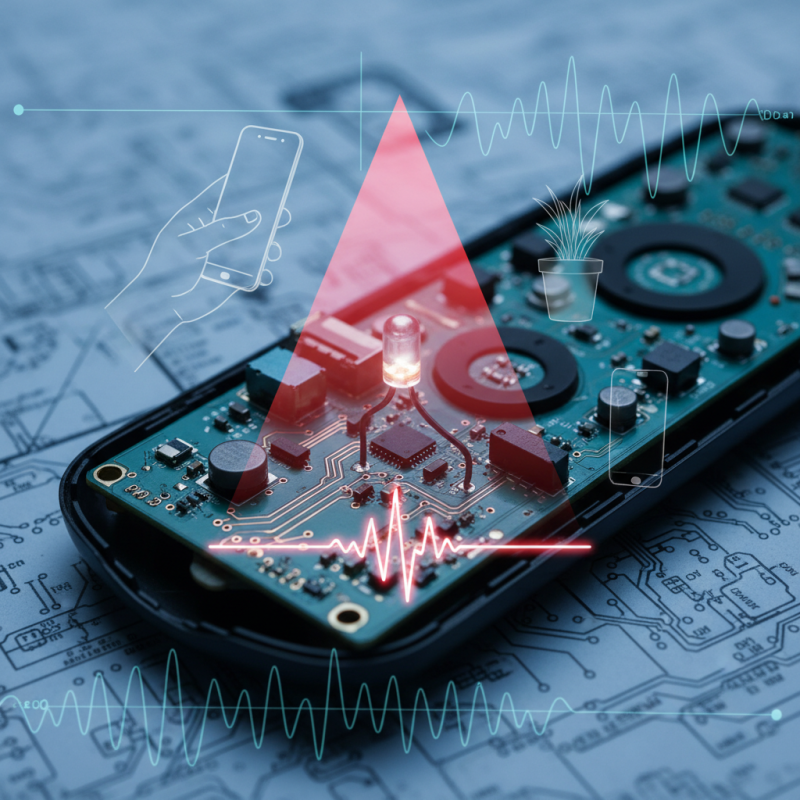
How Infrared Emitting Diodes Work in Remote Controls Tips?

How Infrared Emitting Diodes Function in Remote Control Systems

Infrared emitting diodes (IREDs) play a crucial role in remote control systems. These small components emit infrared light, which is invisible to the human eye. When you press a button on your remote, the IRED sends out a series of pulses. Each pulse represents data, such as a signal to change channels or adjust volume. This simple yet effective mechanism allows for seamless interaction with various devices.

The range of IREDs is typically around 5 to 10 meters. However, factors like obstacles and ambient light can impact their effectiveness. It’s interesting to note that not all IREDs perform the same way under different conditions. For instance, a direct line of sight is often required for optimal performance, leaving some users frustrated when interference occurs. Understanding these limitations can enhance user experience.

Moreover, the efficiency of IREDs can vary. Sometimes, the emitted signal may weaken over time or with repeated use. This raises questions about the longevity and reliability of the technology. Users might need to take extra care to ensure their remotes are functioning properly. In the end, while IREDs are widely used, their performance can be inconsistent based on various external factors.

The Role of Infrared Light in Communication Protocols

Infrared light plays a crucial role in the communication protocols used by remote controls. It allows devices to exchange information wirelessly over short distances. When you press a button on your remote, an infrared emitting diode sends a specific light signal to the corresponding device. This signal is invisible to our eyes, yet it carries important commands that control functions such as volume or channel changes.

Tips for effective use of IR remotes include ensuring a clear line of sight between the remote and the device. Obstacles can block the infrared signals, leading to communication failure. Maintain a distance of about 10 to 15 feet for reliable operation. It's also beneficial to regularly check and replace batteries in your remote to ensure optimal performance. Occasionally, consider cleaning the infrared sensor and the remote’s transmitter. Dust can hinder the effectiveness of the signal.

In communication protocols, the modulation of IR signals is another essential aspect. Different devices may use varying frequencies or pulse patterns to interpret commands correctly. Understanding these patterns can lead to more efficient use of devices. However, not all IR remotes are the same. Users must adapt to specific models and their features. Sometimes, even slight variations can lead to confusion or misinterpretation of commands.

How Infrared Emitting Diodes Work in Remote Controls Tips?

Parameter Value
Wavelength of Infrared Light 850 nm - 950 nm
Typical Current 20 mA
Power Supply Voltage 3V - 5V
Modulation Frequency 36 kHz - 40 kHz
Communication Range Up to 10 meters
Common Protocols NEC, Sony SIRC, RC-5

Key Specifications of Infrared Emitting Diodes in Remote Controls

Infrared emitting diodes (IREDs) play a crucial role in remote controls. Understanding their specifications is essential for better performance. These diodes emit infrared light, which is invisible to the naked eye. When you press a button, the IRED sends a coded signal to the receiver. The typical wavelength ranges from 850 to 950 nanometers, offering effective range and sensitivity.

One key specification is forward current. It measures how much current the diode can handle safely. Most IREDs operate around 20-50 mA. Choosing the right current ensures reliable operation. Another aspect is the radiation angle. A wider angle allows more versatility in controlling devices from various positions. The typical angle varies between 20 to 40 degrees.

For optimal use, ensure line-of-sight between the remote and device. Obstacles can impair signal strength. Also, avoid bright sunlight, which can interfere with infrared signals. A fresh battery is vital for consistent performance. Regularly check and replace batteries to avoid unexpected malfunctions. Understanding these specifications can enhance the durability and effectiveness of infrared remote controls.

Key Specifications of Infrared Emitting Diodes in Remote Controls

This chart illustrates the key specifications of infrared emitting diodes commonly used in remote controls. The data reflects standard values for wavelength, forward current, intensity, and reverse voltage.

Advantages of Infrared Technology Over Other Remote Control Methods

Infrared technology offers several advantages over traditional remote control methods. One significant benefit is its reliability. Unlike RF remote controls, which can sometimes face interference from other electronic devices, infrared signals are more stable. The signal travels in a straight line and is less susceptible to disruptions. This makes infrared controls ideal for home entertainment systems and simple appliances.

The simplicity of infrared transmitting diodes also contributes to their effectiveness. They utilize less power compared to other technologies. This means longer battery life for devices, reducing the frequency of battery replacements. Furthermore, infrared diodes can be manufactured affordably. This allows for widespread use in various devices, from TVs to air conditioners.

When using infrared remotes, ensure there are no obstacles between the remote and the device. Any obstruction can block the signal. Always point the remote directly at the receiving sensor for best results. Avoid using the remote in bright sunlight, which can interfere with signal detection. These practices can enhance the performance of your infrared remote control.

Challenges and Advances in Infrared Remote Control Systems

Infrared remote control systems face various challenges today, yet they continue to evolve. As per a recent industry report by MarketsandMarkets, the infrared emitter market is projected to grow to $3.3 billion by 2025. This growth reflects the increasing demand for remote control devices in consumer electronics, automotive, and industrial applications. However, the technology is not without its hurdles.

One significant challenge is interference from other devices. Infrared signals can easily be disrupted by sunlight or other light sources. A study by the IEEE revealed that over 30% of consumers experience issues with remote functionality due to environmental factors. Additionally, the limited range of infrared signals, typically around 5 to 10 meters, restricts device usability. There is a growing need for more robust technology to address these limitations.

Advancements are being made in sensor technology and modulation techniques. Such innovations can enhance signal strength and reduce interference. For instance, the introduction of pulse position modulation (PPM) is showing promise. According to a technical review by SPIE, PPM can improve data transmission reliability in noisy environments. Yet, the industry still faces challenges in terms of cost and compatibility. Improving infrared technology requires continuous research and collaboration among experts to truly capitalize on its potential.

FAQS

: What is the purpose of infrared light in remote controls?

: Infrared light allows wireless communication between devices over short distances, sending commands from the remote.

How important is the line of sight for using IR remotes?

A clear line of sight is crucial; obstacles can block signals, causing failures in communication between devices.

What distance is ideal for using an infrared remote?

It's best to maintain a distance of 10 to 15 feet for reliable operation of infrared remotes.

Why should I regularly check my remote's batteries?

Fresh batteries are vital for consistent performance; old batteries can lead to unexpected malfunctions during use.

How does the modulation of IR signals affect device communication?

Different devices use various frequencies or pulse patterns; understanding these helps improve efficiency and usage.

What can interfere with infrared signals?

Bright sunlight and other light sources can disrupt infrared signals, affecting the remote functionality significantly.

Why is it essential to clean the infrared sensor?

Dust on the sensor can hinder signal effectiveness; regular cleaning ensures better performance of the remote.

What is a common challenge faced by infrared remote systems?

The limited range of 5 to 10 meters restricts usability; many users report issues due to this limitation.

What is pulse position modulation (PPM)?

PPM is a technique that improves data transmission reliability, especially in noisy environments, enhancing IR systems.

How can I adapt to different IR remote models?

Users should familiarize themselves with specific models, as slight variations can lead to command misinterpretation.

Conclusion

Infrared emitting diodes (IREDs) play a crucial role in remote control systems by converting electrical energy into infrared light, which is then used for wireless communication. Specifically, they emit signals that are detected by sensors in devices like televisions and air conditioners, enabling users to control these devices from a distance. Understanding **how do infrared emitting diodes work in remote controls** is essential, as it involves knowledge of communication protocols that govern signal transmission and reception.

The specifications of IREDs, such as wavelength and intensity, directly impact their effectiveness in remote control applications. Infrared technology offers significant advantages over alternatives, including cost-effectiveness and low power consumption. However, challenges remain in terms of signal interference and range limitations. Ongoing advances in infrared remote control systems focus on enhancing performance and expanding capabilities, ensuring that this technology continues to be a reliable choice for remote communications.

Charlotte

Charlotte

Charlotte is a seasoned marketing professional with a deep understanding of the company's portfolio and a passion for elevating its presence in the market. With a keen eye for detail and a commitment to excellence, she ensures that our professional blog is regularly updated with insightful articles......