Why Does My LED Indicator Keep Flickering?

Time:2026-05-01 Author:Mason
0%

LED indicators serve as essential visual signals in both consumer electronics and industrial applications. Yet, a common issue arises: "Why is my LED indicator flickering?" This problem can frustrate users and signal underlying issues. According to a report by the Institute of Electrical and Electronics Engineers (IEEE), up to 20% of LED failures are linked to flickering, indicating a need for better understanding and troubleshooting.

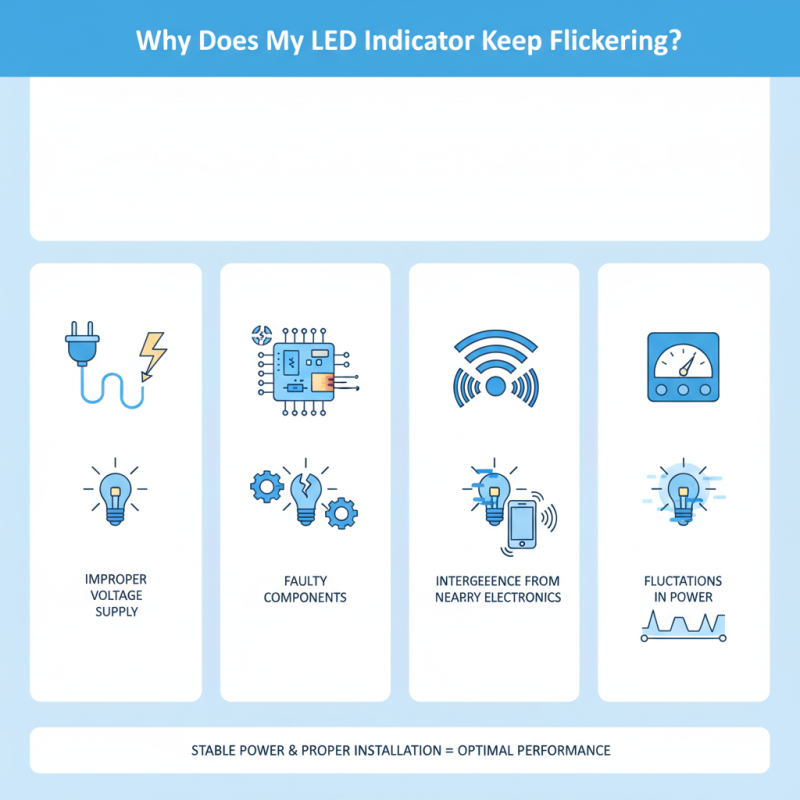
Flickering can stem from various factors, such as improper voltage supply, faulty components, or interference from nearby electronics. A study by the National Institute of Standards and Technology (NIST) revealed that fluctuations in power can induce flickering in LED systems, often overlooked in routine checks. Many users fail to recognize these key aspects, leading to unresolved issues and downtime.

Addressing flickering requires understanding its root causes. While many people assume it's an inherent fault, often, it's a result of external conditions or poor installation practices. Awareness of these factors can empower users to take corrective action effectively. Ensuring stable power sources and proper installation is essential for optimal LED performance.
Why Does My LED Indicator Keep Flickering?

Common Causes of Flickering LED Indicators

Flickering LED indicators can be quite frustrating. There are several common causes behind this issue. One frequent culprit is a poor connection. Loose wires or faulty solder joints may lead to inconsistent power delivery. Even minor vibrations can exacerbate this problem.

Another reason for flickering could be voltage fluctuations. If the power supply fluctuates frequently, it can cause the LED to blink erratically. This situation often occurs in older electrical systems or during peak usage times. Checking your power source may be necessary to resolve this issue.

Sometimes, incompatible dimmer switches play a role as well. Not all dimmers work well with LED bulbs. This mismatch can result in flickering or uneven lighting. It's essential to use compatible fixtures and switches to ensure a stable performance. Addressing these issues may require some trial and error, but understanding these causes can lead to a more reliable lighting experience.

Understanding the Role of Power Supply in LED Flickering

LED flickering is a common issue that many face. One significant factor behind this problem is the power supply. An inadequate power supply can lead to inconsistent voltage levels. This inconsistency causes the LED to dim and flicker. Understanding how power delivery works is crucial for stable lighting.

Various factors influence power flow to LEDs. Fluctuations can occur due to aged wiring or loose connections. These faulty connections may not deliver a steady current. It’s essential to inspect these components to prevent flickering. Moreover, using a power supply not suited for your setup can amplify voltage issues. It’s a common oversight but leads to irritating results.

In some cases, dimmers may contribute to the problem. Not all dimmers are compatible with LED technology. Their inability to provide the right voltage range can be frustrating. If the flickering persists, reflective changes in the setup might be necessary. A thorough examination of both the power supply and the LED fixtures can reveal potential issues.

LED Indicator Flickering Analysis

This chart illustrates the common causes of LED flickering based on a survey of LED users. The data shows the percentage of users reporting each cause of flicker.

Impact of Environmental Factors on LED Indicator Stability

LED indicators are prone to instability influenced by various environmental factors. High temperatures can cause fluctuations in electrical resistance. This results in flickering. A study published in the Journal of Sustainable Electronics indicates that temperatures above 75°C can reduce LED lifespan and performance by up to 50%.

Humidity is another key factor. Elevated moisture levels may cause short-circuiting or corrosion. According to industry sources, LEDs performing in environments above 60% humidity experience a dramatic increase in flickering rates. Furthermore, dust and particulate matter can interfere with electrical connections. Poor airflow around LEDs can exacerbate overheating, leading to unexpected behavior.

Potential power surges can also contribute to flickering. Sudden changes in voltage can disrupt the steady operation of LEDs. Research shows that a voltage fluctuation of just 10% can lead to a visible flicker. Each of these factors can seem insignificant in isolation but collectively impact the performance of an LED indicator. Understanding these elements is crucial for maintaining LED reliability in various settings.

Troubleshooting Steps to Resolve Flickering LED Indicators

Flickering LED indicators can be frustrating and confusing. They may signal an issue with the power source, the circuit, or even the LED itself. Identifying the root cause is essential for effective troubleshooting. Start by checking the power supply. Ensure it is stable and meets the necessary voltage levels. Unstable or fluctuating power can lead to flickering.

Next, inspect the wiring. Loose connections or damaged wires can disrupt the current flow. Look for any signs of wear or corrosion. If the wiring appears intact, move on to the LED unit. Sometimes, the flickering can point to a failing LED. Test the LED in a different circuit to see if the issue persists. This step helps pinpoint whether the problem lies with the LED itself or its setup.

Another common culprit is outdated dimmer switches. Old or incompatible dimmers can misread the LED's requirements, causing flickering. Upgrading to newer models designed for LED compatibility can resolve this. Keep in mind that not all troubleshooting tips work for every situation. Reflection and careful observation are key to finding the right solution.

When to Seek Professional Help for LED Flickering Issues

LED lights have become essential in our homes and workplaces. However, flickering indicators can be irritating. Understanding when to seek professional help is crucial for the safety and longevity of your lighting systems. Research shows that up to 38% of LED users experience flickering at some point. This issue can be caused by various factors, including incompatible dimmer switches or wiring problems.

If your LED lights flicker consistently, it’s time to act. Professional electricians can diagnose the underlying issues that might not be obvious. Indicators of serious issues include frequent flickering or lights dimming unexpectedly. A study from the Electrical Safety Foundation International highlights that faulty wiring can lead to fires, impacting safety significantly. Additionally, using inappropriate dimmers with LED lights can also create a hazardous environment.

Regular maintenance can help mitigate problems. However, when flickering persists, stop using the lights and consult an expert. Ignoring the issue can lead to greater electrical problems. Remember, driving solutions without proper insight can risk not only your LEDs but also your safety. Seek guidance, even if the solution seems simple.

Why Does My LED Indicator Keep Flickering? - When to Seek Professional Help for LED Flickering Issues

Issue Possible Cause Recommended Action Professional Help Needed?
Flickering LED light Voltage fluctuations Check voltage supply and connections Yes
Inconsistent brightness Incompatible dimmer switch Replace with LED-compatible dimmer No
LEDs turning off Overheating Improve ventilation and cooling Yes
Random flickering Loose wiring Inspect and secure connections Yes
Flickering during use Incompatible fixtures Replace fixtures or bulbs No

FAQS

: What causes LED flickering?

: LED flickering often results from an inadequate power supply or unstable voltage levels.

How can wiring affect LED performance?

Aged wiring or loose connections can disrupt power flow, leading to flickering.

What should I check first if my LED is flickering?

Start with the power supply. Ensure it delivers stable voltage levels to the LEDs.

Can dimmers cause flickering in LEDs?

Yes, incompatible or outdated dimmers may not provide appropriate voltage, causing flickering.

What if the flickering continues after troubleshooting?

Further examination of both power supply and LED fixtures may be necessary.

How do I know if the LED is faulty?

Test the LED in a different circuit. If it still flickers, it may be failing.

Should I upgrade my dimmer switch?

Yes, consider upgrading to newer dimmers that are compatible with LED technology.

What are some signs of bad wiring?

Look for visible wear and corrosion in wires or loose connections that disrupt current flow.

Is there a guaranteed fix for flickering LEDs?

There is no one-size-fits-all solution. Troubleshooting requires careful observation and reflection.

Why is understanding power delivery important?

It helps ensure stable lighting and prevents common issues like flickering in LED setups.

Conclusion

The article "Why Does My LED Indicator Keep Flickering?" explores various reasons behind the flickering of LED indicators. It starts by outlining common causes, such as loose connections or incompatible dimmers, which are often the culprits leading to inconsistent illumination. It then delves into the crucial role of power supply quality, noting that fluctuations in voltage can significantly impact LED performance. Additionally, environmental factors like temperature and humidity are discussed as potential influences on indicator stability.

To address the issue, the article provides practical troubleshooting steps that can help users determine the source of flickering and resolve it. However, if these steps do not lead to a solution, the piece advises when it may be necessary to seek professional assistance for persistent flickering issues. This comprehensive examination helps readers understand "why is my LED indicator flickering" and equips them with the knowledge to tackle the problem effectively.

Mason

Mason

Mason is a seasoned marketing professional with a deep expertise in the company's offerings and a passion for driving brand awareness. With a strong background in digital marketing strategies, he has an innate ability to connect with diverse audiences and effectively communicate product benefits.......