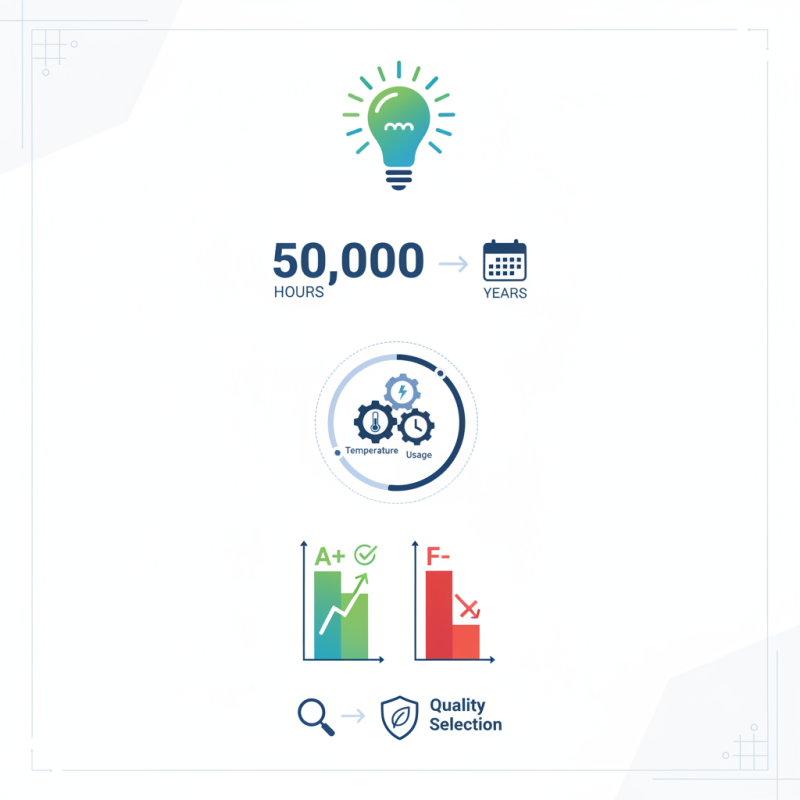
Understanding "What is the lifespan of high-power LED components" is crucial for various applications. LEDs are known for their efficiency and longevity. A well-known expert, Dr. Emily Stone, states, "The lifespan of high-power LEDs can surpass 50,000 hours under optimal conditions." This claim highlights the potential durability of these components.
However, factors such as temperature, voltage, and usage impact this lifespan. Proper thermal management is essential. In practical terms, using high-quality drivers can extend an LED's life significantly. Despite their advantages, not all products meet the same standards. Some lower-quality LEDs may fail much earlier.
The variability in lifespans calls for careful selection. Consumers should seek detailed information on expected performance. The lack of uniformity in the market can lead to confusion. Overall, knowing "What is the lifespan of high-power LED components" helps in making informed decisions.
High power LED components are energy-efficient light sources. They emit bright light while consuming less energy than traditional bulbs. These LEDs are used in various applications, from street lighting to automotive headlights. High power LEDs usually provide a luminous output of over 100 lumens per watt. This efficiency makes them popular in commercial lighting solutions.
The lifespan of high power LED components can vary. Typically, they last between 25,000 to 50,000 hours. However, this can be influenced by factors such as operating temperature and usage patterns. Heat management is critical; excessive heat can shorten their lifespan. Inconsistent power supply can also impact performance. Users must consider these variables to optimize the longevity of their LED lights.
Understanding high power LEDs involves grasping their construction and thermal properties. They consist of a semiconductor chip, a heat sink, and a lens. Each part contributes to their performance. While many users expect them to last indefinitely, wear and tear occur over time. Some may experience dimming or color shifts. Regular maintenance can help mitigate these issues, ensuring reliable illumination.
This chart represents the average lifespan of high power LED components at different color temperatures measured in Kelvin (K). The lifespan varies slightly between different color temperatures, with the highest longevity typically observed in the 4000K and 5000K ranges.
The lifespan of high power LED components is influenced by various critical factors. Temperature stands out as a primary concern. High temperatures can severely diminish LED performance and longevity. Heat management systems are essential for optimal functioning because excessive heat can lead to premature failure. The materials used in the LED assembly, including the quality of the semiconductor and optics, also play a significant role. They contribute to the overall efficiency and durability of the LEDs.
Light output degradation is another factor to consider. Over time, LEDs lose brightness, which is not always evident at first. However, this gradual decline can affect user experience. Additionally, electrical factors like input voltage variations and current surges can compromise lifespan. Proper power supply design can mitigate these issues, ensuring stability.
Environmental conditions matter as well. Humidity, dust, and UV exposure can impact LED lifespan. Indoor installations have a different risk profile compared to outdoor setups. Users in extreme environments should reassess their choices to prevent issues. While high power LEDs are known for their long life, understanding these influencing factors can help consumers make informed decisions.
| Factor | Impact on Lifespan (Years) | Typical Range of Lifespan |
|---|---|---|
| Operating Temperature | -5 to -10 years | 25,000 - 50,000 |
| Electrical Overstress | -5 to -15 years | 20,000 - 40,000 |
| Quality of Components | +5 years | 30,000 - 60,000 |
| Heat Dissipation | -2 to -8 years | 25,000 - 50,000 |
| Usage Conditions | -3 to +5 years | 20,000 - 55,000 |
| Driving Current | -1 to -5 years | 20,000 - 45,000 |
High power LEDs are remarkable for their longevity. On average, they last about 25,000 to 50,000 hours. This duration is significantly longer than traditional incandescent bulbs, which typically last around 1,000 hours. Even compact fluorescent lamps (CFLs) fall short, with a lifespan of about 10,000 hours. This remarkable difference in lifespan is one reason why many prefer high power LEDs for both residential and commercial lighting.
However, the lifespan can depend on several factors. Environmental conditions, usage patterns, and heat management play crucial roles. For instance, high temperatures can drastically reduce an LED’s lifespan. Even with the impressive longevity of LEDs, users should monitor their performance. Not every LED will perform consistently. Dimming, color shifting, and brightness reduction can hint at the need for replacement. This aspect of LED usage requires reflection and awareness from consumers, particularly in high-demand applications.
High power LEDs are widely used in various applications, from automotive lighting to industrial uses. They are praised for their energy efficiency and long lifespan. However, understanding their common failures is crucial to maximize their performance.
One major degradation mechanism is thermal failure. Excessive heat can lead to reduced light output and eventual failure. This happens when temperature management isn’t optimized.
Another common issue is material degradation. Over time, the phosphor materials used in LEDs may deteriorate. This degradation can change the emitted color and reduce brightness. Environmental factors like humidity and UV exposure can accelerate this process. Unexpected failures can occur even in well-designed systems. Regular inspections and maintenance are essential, yet often overlooked.
These problems remind us that even advanced technology requires careful handling. While high power LEDs can last several years, their reliability is not guaranteed. Users must be aware and proactive. Understanding the specific failure modes helps in planning replacement and maintenance. Embracing a proactive mindset will enhance the longevity and performance of high power LEDs in various applications.
High-power LEDs are known for their longevity, typically lasting over 25,000 hours. However, lifespan can vary based on several factors. Effective thermal management is crucial. Excessive heat can degrade LED performance. Implementing heat sinks and using proper airflow can enhance cooling.
Another best practice involves careful selection of drivers and power supplies. Mismatched voltage or current can lead to premature failure. High-quality components can ensure stability and reliability. Regular monitoring of LED performance is important too. This helps in identifying potential issues early on.
Environment matters, too. Operating in extreme temperatures or high humidity can affect longevity. A controlled environment boosts lifespan significantly. Lastly, consider the installation process. Proper handling engages the components and reduces the risk of damage. Reflect on these aspects, as minor neglect can lead to unexpected outcomes.
: Temperature is the main concern. High temperatures can significantly reduce performance and longevity.
Implementing heat sinks and ensuring proper airflow are effective methods for better cooling.
LEDs lose brightness gradually. This decline is not always noticeable at first but affects user experience.
Humidity, dust, and UV exposure can negatively affect LEDs. Indoor and outdoor environments pose different risks.
Proper power supply design stabilizes input voltage and current. This reduces the risk of premature LED failure.
Thermal failure and material degradation are major issues. Excessive heat and deteriorating phosphor materials lead to reduced brightness.
Regular monitoring of performance is essential. Early identification can prevent unexpected failures.
Inspections help detect issues early. Maintenance is often overlooked but is crucial for longevity.
Proper handling during installation reduces the risk of damage. Neglecting this can lead to unexpected failure.
A proactive approach is important. Understanding failure modes helps plan for replacement and maintenance effectively.
High-power LED components are increasingly used in various applications due to their efficiency and longevity. When exploring the question, "What is the lifespan of high-power LED components?", it is essential to consider several factors that influence their durability, including thermal management, electrical stress, and environmental conditions. Typically, these LEDs can last anywhere from 25,000 to 50,000 hours, significantly outlasting traditional light sources such as incandescent and fluorescent bulbs.
However, common failures and degradation mechanisms such as lumen depreciation, thermal runaway, and chip degradation can impact their overall lifespan. To maximize the longevity of high-power LEDs, implementing best practices such as proper heat dissipation, using reliable drivers, and maintaining optimal operating conditions is crucial. By addressing these factors, users can ensure that high-power LEDs perform at their best for as long as possible.

Zever Light