In the quest for optimal plant growth, the question arises: which LED wavelength is best for plant growth? Experts in horticulture emphasize the importance of specific wavelengths in enhancing photosynthesis. Dr. Jane Smith, a leading researcher in plant biology, states, "The right light spectrum can significantly boost plant health and yield."
Different crops respond uniquely to various wavelengths. For instance, blue light encourages leaf growth, while red light enhances flowering. This complexity makes choosing the correct LED wavelength not straightforward. Many growers often overlook this aspect, focusing instead on light quantity rather than quality. The interaction of light with plant pigments can yield surprising outcomes, sometimes underperforming expectations.
Despite advancements in LED technology, the journey to understanding the best wavelengths continues. Some growers might use trial and error, which can lead to inconsistent results. Reflecting on this, it is clear that deeper insights into "which LED wavelength is best for plant growth" are essential for maximizing agricultural efficiency. The continual exploration of light's role in plant development is crucial for future advancements.
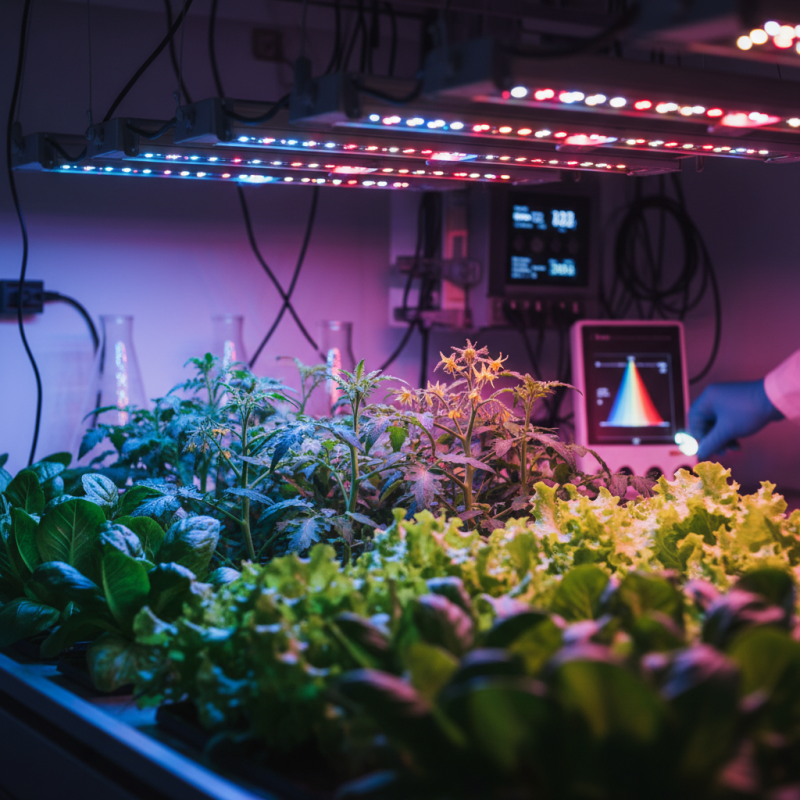
Plants rely on light for photosynthesis, making the spectrum of light crucial. Plants absorb specific wavelengths of light for growth. Blue light, around 450 nm, promotes leafy growth. It’s essential for the vegetative stage, aiding chlorophyll production.
Red light, near 660 nm, is vital during flowering and fruiting. It triggers flowering hormone responses. Combining blue and red light can optimize plant growth. Studies show that plants thrive in a mix of these wavelengths. However, too much red can lead to leggy plants.
Not all plants react the same way to different wavelengths. Some species may need more blue than red, while others may require the opposite. Experimenting with varying light spectrums can be beneficial. Observing plant responses provides insights. Hence, understanding light needs is a dynamic process. Consider factors like plant type, growth stage, and environmental conditions. This awareness can enhance growth efficiency.
| Wavelength (nm) | Light Color | Photosynthetic Efficiency (%) | Plant Growth Stage |
|---|---|---|---|
| 400 - 430 | Violet/Blue | 30 | Seedling |
| 430 - 450 | Blue | 40 | Vegetative |
| 450 - 475 | Cyan | 35 | Vegetative |
| 600 - 640 | Red | 45 | Flowering |
| 640 - 680 | Deep Red | 50 | Flowering |
| 500 - 520 | Green | 25 | All Stages |
: Photosynthesis is the process where plants convert light into energy. This energy drives their growth and development.
Different wavelengths play unique roles. Blue light promotes leaf growth, while red light enhances flowering and fruiting.
An imbalanced light spectrum can hinder growth and reduce plant quality. Over-reliance on one color may cause issues.
Blue light stimulates healthy leaf and stem growth. It increases chlorophyll production, resulting in robust plants.
Red light is absorbed effectively by plants. This wavelength enhances flowering and fruit production for better yields.
Yes, green light penetrates deeper leaf layers. It may contribute positively to photosynthesis despite being often neglected.
Light intensity, duration, and environmental conditions can significantly affect photosynthesis in plants.
Conducting experiments with different light combinations can reveal insights. Monitoring responses allows for better adjustments.
No, plants react differently under varying conditions and wavelengths. Observation is crucial for optimal growth.
Relying solely on red light may lead to elongated stems and fewer leaves, harming overall plant health.
Determining which LED wavelength is best for plant growth involves understanding the specific light spectrum requirements of different plants and how these wavelengths influence photosynthesis and overall plant health. Photosynthesis plays a crucial role in plant development, as it utilizes light energy to convert carbon dioxide and water into glucose and oxygen. This process highlights the importance of selecting the appropriate wavelengths to optimize growth.
Research indicates that red and blue LED lights are particularly beneficial for plant growth, with red light promoting flowering and fruiting, while blue light encourages leaf development and vegetative growth. Green light, although less effective for photosynthesis, can still play a role in penetrating the leaf canopy. Therefore, choosing the right LED wavelength tailored to specific plant types is essential for maximizing growth potential and achieving healthy plants.

 Zever Light