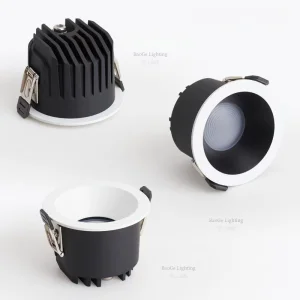
In the modern optoelectronics landscape, the performance of solid-state lighting systems is no longer determined solely by the raw lumen output of the emitter. Instead, the design, manufacturing precision, and material integrity of secondary optics (optical LED lenses) serve as the definitive bottleneck for overall efficacy, glare control, beam shaping, and environmental resilience. Global procurement managers, system integrators, and OEMs across Europe, North America, and the Asia-Pacific region are shifting away from off-the-shelf catalog products toward highly optimized, application-specific optical components.
Global architectural and industrial systems require precise Full Width at Half Maximum (FWHM) angles. Minimizing stray light and maximizing target area illuminance reduces operating costs and complies with strict dark-sky regulations.
From sub-zero municipal street lighting to high-temperature automotive enclosures and chemical-heavy UV curing chambers, optical lenses must resist yellowing, micro-cracking, and thermal degradation over 50,000+ hours.
Procuring agents must balance optical-grade Polycarbonate (PC), Polymethyl Methacrylate (PMMA), and Optical-grade Liquid Silicone Rubber (LSR). Each exhibits distinct light transmission, refractive index (nd), and UV-aging profiles.
Consequently, matching the correct manufacturing partner in China is no longer merely a pricing exercise. It is a critical component of risk mitigation. Leading enterprises prioritize factories that implement advanced optical simulation (e.g., Zemax, TracePro), precision tooling design, clean-room injection molding, and exhaustive optical testing protocols (using goniophotometers and integrating spheres).
Modern lighting solutions require tailored optical distributions. A single lens profile cannot satisfy the asymmetric distributions needed for roadway safety, the concentrated beam profiles required for medical diagnostic devices, or the uniform fields needed for high-resolution video walls.
Roadway illumination demands asymmetric batwing light distributions (Type I, II, III, IV, and V) to project light uniformly along corridors while eliminating back-light waste and glare. Secondary optics designed for outdoor applications incorporate multi-cavity silicone or PMMA arrays that seal directly against dust and water ingress, eliminating the need for bulky external glass covers.
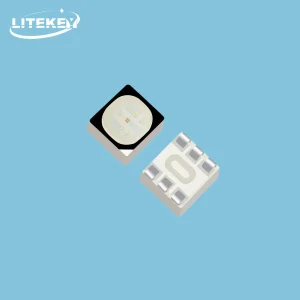
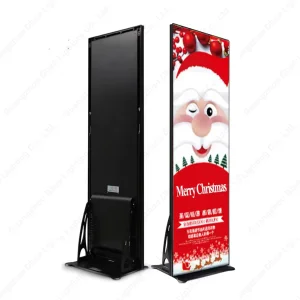
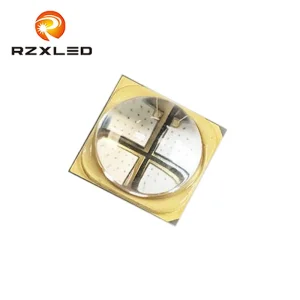
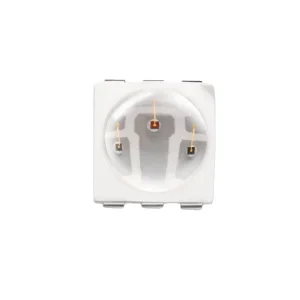
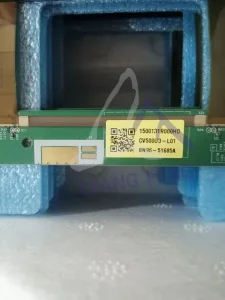
For applications utilizing advanced display units like the 6-Lead-Technology Black Surface 3535 Multi Color SMD LEDs for Full Color Video Walls or the CV500U3-L01 50 Inch UHD LCD Matrix Display Unit, optical homogenization is critical. Micro-lens arrays and diffusion films prevent hot-spotting, maximize contrast, and optimize viewing angles without shifting chromaticity coordinates.
The evolution of optoelectronics is accelerating towards miniaturization and dynamic control. As Chip-Scale Package (CSP) LEDs and Micro-LEDs become standard, traditional macro-lenses are giving way to micro-optics directly integrated at the wafer or packaging level.
For high-power emitters and UV-C systems, LSR is displacing PMMA and PC. It offers thermal stability up to 150°C, virtually zero UV aging, and enables complex undercut geometries that cannot be demolded with standard rigid thermoplastics.
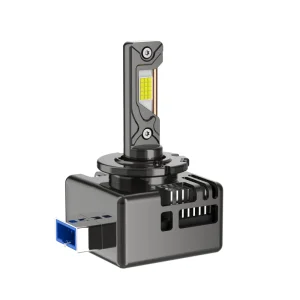
Automotive headlamps, exemplified by specialized configurations like the Car Accessories High Power Chip on Board D Series LED Headlight D8s, utilize matrix optics to dynamically project light only where needed, preventing glare for oncoming traffic.
Industrial UV curing, utilizing narrow wavelengths such as the Deep Ultraviolet LED UV LED Lamp 6868 12W 415nm, demands quartz or highly specialized, non-degrading fluoropolymers to maintain transmissive properties over extended usage cycles.
Southern China, particularly the Pearl River Delta, remains the hub of the global optoelectronics supply chain. Municipalities like Zhongshan have cultivated dense, integrated clusters of electronic component suppliers, raw material refiners, automated assembly tooling plants, and accredited testing centers. This ecosystem enables rapid iteration of optical components from concept to production.
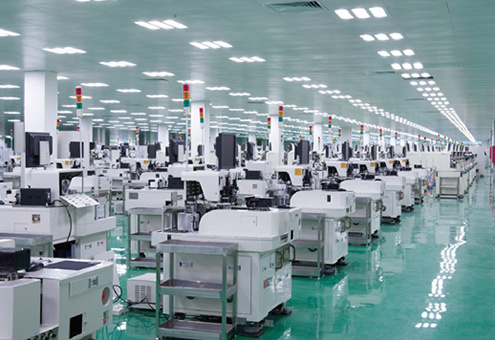
Zhongshan-based manufacturers like Zhongshan Zever Light Co., Ltd. leverage this industrial density to balance technical capabilities with scale. The presence of specialized engineering talent, coupled with high-speed automated production equipment, allows Chinese factories to supply competitive, high-tolerance components to global infrastructure projects.
Developing custom refractive and reflective surfaces using software like Zemax or TracePro, optimizing the lux-to-lumen ratio, and verifying beam uniformity prior to committing capital to molds.
Using sub-micron CNC milling and diamond turning machines to fabricate mirror-finish mold inserts, ensuring nominal deviation from the simulated CAD profiles.
Injecting optoelectronic-grade PMMA, PC, or LSR in ISO class-compliant environments to prevent dust contamination, followed by goniophotometric validation of the luminous intensity distribution.
Zhongshan Zever Light Co., Ltd.
Established in 2005, Zhongshan Zever Light Co., Ltd. is a professional LED manufacturer located in Zhongshan, China—one of the country’s key lighting industry hubs. Over nearly two decades, we have established our presence in the research, development, production, and sales of an extensive portfolio of optoelectronic products.
Our primary product lines include THT LEDs, SMD/Chip LEDs, LED displays, infrared LEDs, dot matrix modules, LCD backlights, and various LED lighting fixtures for commercial and residential applications. Operating from a modern facility covering approximately 6,000 square meters, we maintain 8 high-speed production lines supported by a workforce of over 800 employees.
We operate under strict quality management structures certified to ISO9001 and ISO14001 standards. All raw materials we use comply with RoHS directives and are sourced from reliable suppliers in Taiwan, the United States, Japan, and South Korea to guarantee performance, longevity, and environmental safety.
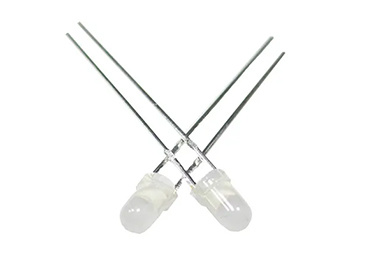
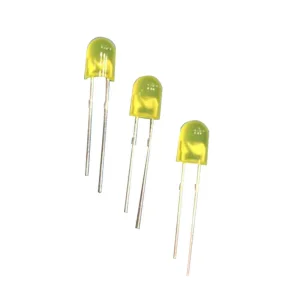
3mm Round Standard T-1 25mA 30Deg 592nm Led Light Chip Manufacturing
At Zever Light, we emphasize innovation and customization. Our dedicated R&D team, consisting of 16 experienced engineers with an average of more than 5 years in the LED industry, handles both standard catalog lines and complex customized requirements. We work closely with our clients to transform preliminary designs into high-yield, market-ready solutions.
Our facility is managed by an ERP platform to streamline material flows and verify on-time delivery. Quality control inspectors run strict protocols across all phases—from incoming material inspection to assembly, thermal cycling, and final delivery dispatch. We support urgent lead times, with accelerated manufacturing options completing orders in 1 to 2 weeks.
"Quality is our culture." Working with Zever Light means your investment is secure and your business is supported by a dependable partner. We look forward to building long-term partnerships and creating a brighter future together. Contact us today for product inquiries.
Procuring optical components from China requires strict compliance with domestic and international regulatory standards. Zever Light ensures that all shipped products carry the necessary declarations and laboratory reports to prevent customs holds or deployment delays.
Every product is certified to comply with CE, RoHS, and REACH directives, ensuring heavy-metal-free construction for green procurement mandates.
Under ISO9001 and ISO14001, every batch is traceable down to the raw material lot numbers, maintaining stability across high-volume production runs.
Using ERP tracking systems, Zever Light facilitates door-to-door delivery, custom packaging options, and real-time transit visibility for international clients.
 Zever Light