Kiribati, an island nation composed of 32 atolls and one raised coral island in the heart of the Pacific Ocean, faces a unique combination of logistical, geographical, and environmental challenges. With a population spread over massive distances (across three island groups: the Gilbert, Line, and Phoenix Islands), the localized commercial and industrial infrastructure in South Tarawa (the administrative center) and neighboring areas is heavily reliant on maritime imports, solar energy microgrids, and highly resilient engineering components.
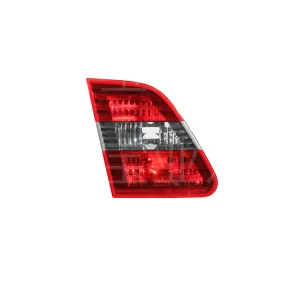
From an automotive and public transport perspective, vehicle fleets in Kiribati consist largely of imported utility trucks, light commercial vehicles, and public transport mini-buses (locally utilized for transit on the main roads of Tarawa). The local environment is incredibly harsh on vehicle electrical systems and exterior lighting: high ambient temperatures, persistent atmospheric humidity averaging 80%, and an atmosphere saturated with corrosive sea salt aerosol particles. Standard consumer-grade LEDs imported without certified packaging protection fail within months due to electrical shorts, yellowing of encapsulation materials, and accelerated galvanic corrosion of the leadframes.
Consequently, the transition toward Automotive Grade LEDs is not merely a preference for higher brightness, but an operational necessity. To ensure the durability of municipal transport, emergency response vehicles, marine landing crafts, and infrastructure lighting, procurement managers in Kiribati are turning to manufacturing centers like Zhongshan, China, for durable, high-reliability LED chips that conform to strict global standards.
The global automotive LED market is transitioning rapidly towards high-power surface-mount-device (SMD) packaging, CSP (Chip Scale Package) architecture, and advanced smart-matrix lighting. These technologies offer high lumen density, precise beam patterns, and lower thermal resistance. Globally, the demand for automotive-grade components is governed strictly by the Automotive Electronics Council (AEC) guidelines, which demand strict thermal cycling, electrostatic discharge (ESD) immunity, and mechanical shock testing.
For isolated economies like Kiribati, these global supply chain trends directly influence localized purchasing patterns. Since Kiribati does not have domestic semiconductor fabrication facilities, it relies entirely on foreign OEM/ODM suppliers. However, direct procurement of finished, highly specialized sub-assemblies (such as tailored LED headlight retrofits, marine-grade auxiliary signals, and off-grid solar-integrated light guides) allows local distributors to cut out middlemen, ensuring both cost-efficiency and direct technical support from factories based in international optoelectronics hubs like Zhongshan.
Key development trends for the Kiribati market include:
To design an LED system capable of operating in the coastal areas of South Tarawa, Betio, and Christmas Island (Kiritimati), optoelectronic engineers must address several degradation mechanisms. In high-salinity marine environments, standard LED components undergo localized chemical degradation. Halogen and moisture ingress can cause copper migration across insulation boundaries, leading to catastrophic short circuits. Furthermore, sulfur compounds from engine emissions or localized bio-decomposition react with silver-plated reflectors inside standard SMD LEDs, causing dark sulfurization layers that drastically reduce light output.
Zever Light’s engineering roadmap solves these issues through the following specialized technical paths:
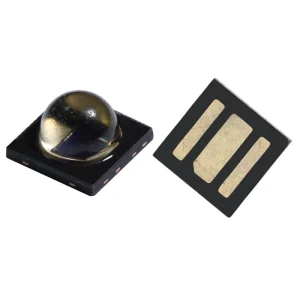
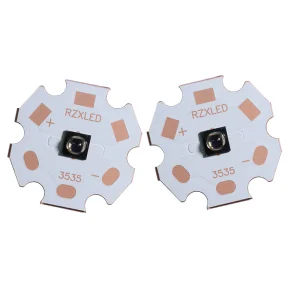
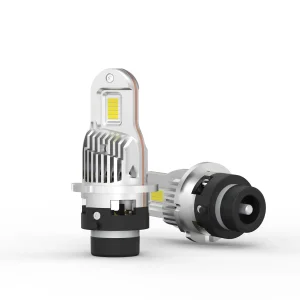
Using a direct copper base plate (as seen in our D2 LED Headlight series) provides a direct thermal path from the LED junction to the external heat sink. This reduces thermal resistance (Rth,j-c) to under 2 K/W. Under the constant heat of Kiribati's equatorial climate, maintaining lower junction temperatures is critical for preserving lumen maintenance (L70 lifetime > 50,000 hours).
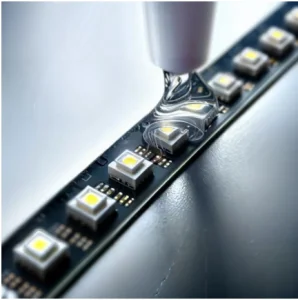
Unlike standard epoxy, which degrades and turns yellow when exposed to high solar UV indexes, optically clear silicone gel offers high thermal stability and UV transmittance. This encapsulation protects the sensitive chip bond wires from external humidity while preventing light attenuation over time.
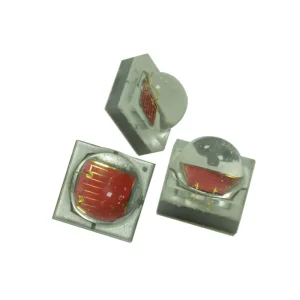
Whether configuring high-brightness white diodes (6500K) for nocturnal off-road driving, 620nm red SMD LEDs for marine brake/indicator lights, or specialized UVC sterilization modules (255nm) for municipal water purification, controlling the spectral power distribution is essential. Zever Light ensures high chromaticity binning stability to provide uniform lighting across all batches.
Deploying LED systems in remote island states like Kiribati requires comprehensive planning that extends beyond the product itself. Industrial procurement officers, municipal engineers, and commercial fleet operators must evaluate total-cost-of-ownership (TCO) models and shipping logistics. Zever Light offers end-to-end industrial solutions tailored for small island developing states (SIDS) to address these logistical barriers.
Local microgrids in Kiribati often experience voltage sags and surges due to reliance on solar PV setups combined with diesel generators. We package our automotive light assemblies with wide-input-voltage constant-current drivers (9V-32V DC). This architecture buffers the LED chips from electrical transients, preventing premature driver failure and flickering.
Since shipments to Tarawa must transit long sea routes (typically via major transshipment ports in Fiji, Australia, or New Zealand), products are exposed to prolonged damp conditions in marine cargo containers. Zever Light utilizes JEDEC-compliant moisture-barrier bags with active silica desiccant packs and humidity indicator cards. This ensures that the SMD components arrive at Betio Port in pristine condition, ready for standard surface-mount assembly without risk of delamination during soldering.
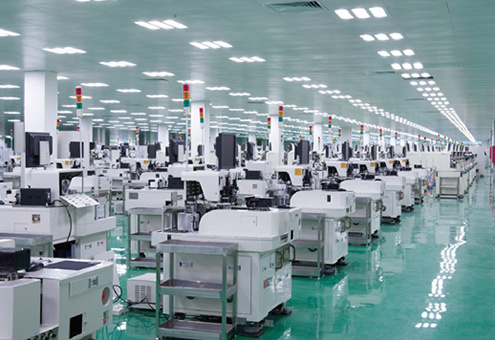
Zhongshan Zever Light Co., Ltd. was established in 2005 and is a professional, high-technology LED manufacturer based in Zhongshan, China—one of the country’s primary and most advanced lighting industry clusters. Over the past two decades, we have dedicated ourselves to the research, development, production, and global export of premium optoelectronic products.
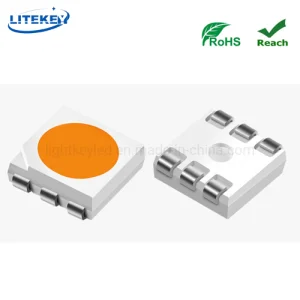
Our comprehensive manufacturing portfolio includes Through-Hole (THT) LEDs, Surface Mount Device (SMD/Chip) LEDs, LED numeric displays, high-power infrared LEDs, dot-matrix modules, LCD backlights, and complex customized LED lighting fixtures designed for automotive, marine, commercial, and residential applications.
Operating out of a modern 6,000 square meter facility, Zever Light maintains 8 high-speed automated production lines staffed by a skilled workforce of over 800 employees. Our manufacturing processes conform strictly to ISO9001 and ISO14001 quality and environmental management protocols. To guarantee the chemical and physical integrity of our products, all raw materials are sourced from leading suppliers in Taiwan, the United States, Japan, and South Korea, ensuring RoHS compliance and long-term product durability.
Our dedicated R&D division consists of 16 experienced engineers, each bringing over five years of specialized industry experience. This team enables us to provide deep OEM and ODM customization services, turning conceptual sketches into market-ready products. Backed by an advanced Enterprise Resource Planning (ERP) platform and a rigid Quality Control (QC) inspection framework at every phase of production, we offer reliable delivery times—fulfilling urgent bulk shipments in as little as 1 to 2 weeks.
At Zever Light, we believe that an LED component is only as good as its weakest link. By enforcing incoming material control, automated optical inspections (AOI), and final burn-in testing under extreme temperature loads, we ensure that our components can withstand severe environments, including the tropical climates of Kiribati.
Our partnership approach means your investment is secure, backed by comprehensive engineering support, detailed batch tracing, and a responsive customer service team that understands the unique needs of island economies and isolated logistics networks.
For custom inquiries, technical parameters, or specialized shipping options to the Pacific region, please connect with our optoelectronic sales team today.
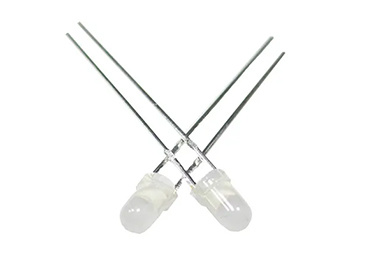
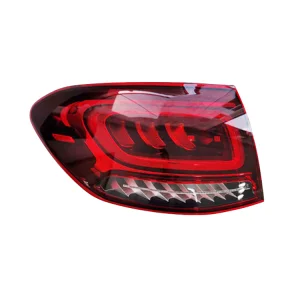
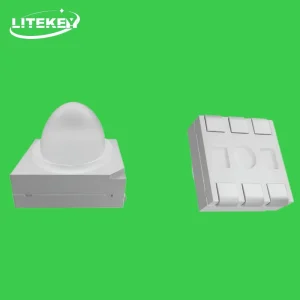
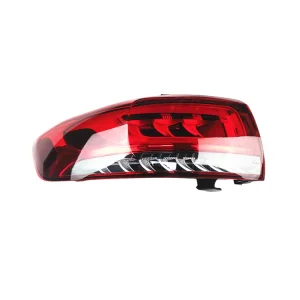
Kiribati features extreme environmental stress factors, including atmospheric salinity, 80%+ humidity, and high solar UV indexes. AEC-Q102 certification guarantees that the LED components have undergone rigorous thermal shock, moisture resistance, and sulfur corrosion testing, making them far more durable than standard commercial-grade LEDs which fail prematurely under salt-spray exposure.
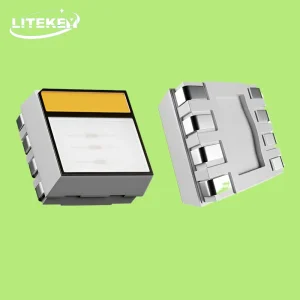
We utilize high-purity copper base materials plated with gold or advanced silver-palladium alloys. Together with moisture-resistant optical silicone encapsulation instead of cheap epoxy resin, this construction prevents corrosive halide ions from attacking the internal bonding wires and reflector surfaces.
Bulk shipments are dispatched from our factory in Zhongshan, transit through major Chinese ports (such as Shenzhen or Guangzhou), and route through Pacific hub hubs (typically Suva, Fiji or Brisbane, Australia) before arriving at Betio Port, South Tarawa. We utilize vacuum-sealed, moisture-barrier packaging (MBB) to protect the components from salt air during the sea journey.
Yes. Through our 16-member engineering R&D team, we customize parameters including color temperature (e.g., warm white to cool white 6500K), specific wavelengths (such as 620nm red for indicators or 255nm UVC for sterilization), and specialized beam angles (e.g., 30°, 60°, or 120°) to match your target system design.
Yes, our complete automotive assemblies utilize intelligent constant-current drivers supporting a wide input voltage range (typically 9V to 32V DC). This architecture stabilizes the system against voltage drops and surges common in solar microgrids and marine vessels powered by alternator systems.
Connect with Zever Light's technical support desk to receive detailed component datasheets, custom packaging options, and bulk logistics pricing tailored for Kiribati and the wider Pacific region.
Request Technical Quote & Samples Zever Light