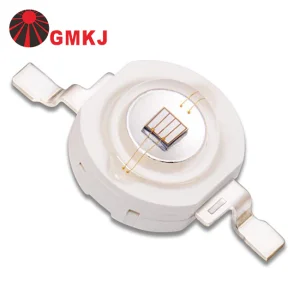
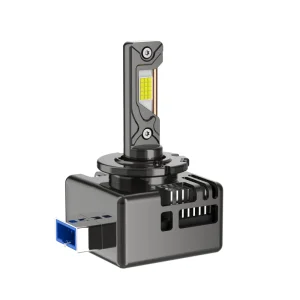

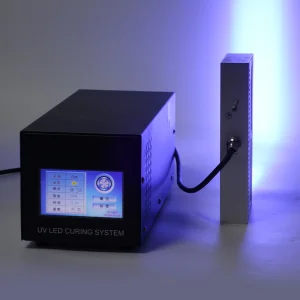
The optoelectronic domain is witnessing an unprecedented paradigm shift from conventional low-voltage (LV) driving configurations to highly efficient High Voltage (HV) LED architectures. Standard LED packages, typically operating at 2.8V to 3.4V, demand massive current loads to achieve high luminous output. This causes severe system-level conduction losses and requires bulky, expensive step-down drivers. In contrast, High Voltage LED chips configure multiple micro-junction structures monolithically on a single substrate, raising the forward voltage threshold ($V_f$) to 12V, 24V, 48V, or even higher (up to 72V or 150V).
From a commercial standpoint, this transition optimizes the entire power conversion loop. High voltage design allows luminaire manufacturers to utilize direct-to-line AC driverless systems or simplified step-down converters. By decreasing operating current, systems minimize ohmic heat dissipation ($I^2R$ losses). This prolongs system lifetime and reduces thermal management overhead. Globally, industrial, commercial, and outdoor public spaces are adopting HV LED chips to fulfill strict energy efficiency mandates, such as the European Union’s Ecodesign Directive (ERP) and the United States’ DLC (DesignLights Consortium) standards.
Established in 2005, Zhongshan Zever Light Co., Ltd. is a leading professional LED manufacturer based in Zhongshan, China—one of the country's key lighting industry hubs. Our facility covers approximately 6,000 square meters and houses 8 fully automated production lines, supported by a workforce of over 800 employees. We specialize in the research, development, production, and sales of high-performance optoelectronic devices, including:
Operating under rigorous ISO9001 and ISO14001 quality management structures, all Zever Light products conform to RoHS and REACH directives. We source our raw materials from premium chip and phosphor suppliers across Taiwan, the United States, Japan, and South Korea to ensure high performance and reliable product lifespans.
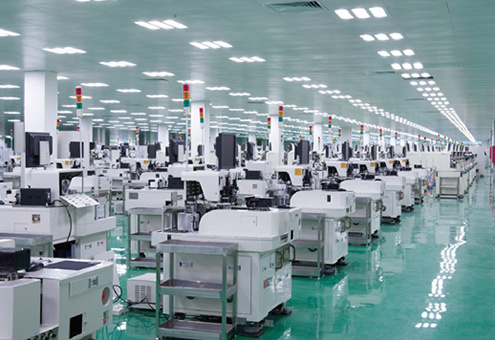
The centralization of the semiconductor supply chain in Zhongshan, China, yields significant structural cost and lead-time advantages. At Zever Light, our production efficiency is supported by:
Zever Light offers comprehensive OEM and ODM support, backed by our 16-member R&D team. Each engineer averages over 5 years of industry experience. We assist clients in optimizing electrical layout, thermal footprint, and spectral output.
| Parameters | High Voltage LED Chip | Traditional Low Voltage LED | Engineering Advantages |
|---|---|---|---|
| Typical Input Voltage | 12V / 24V / 48V / 72V | 2.8V - 3.4V | Allows direct driving and reduces driver power stage losses. |
| Operating Current | 10mA - 45mA | 350mA - 1000mA | Reduces $I^2R$ power dissipation along tracks. |
| Driver Efficiency | > 92% (AC Direct) | 75% - 85% | Eliminates bulky electrolytic capacitors. |
| Thermal Interface | Optimized Ceramic Substrate | Metal Core PCB | Accelerates heat transfer away from the active junction. |
| Color Rendering Index (CRI) | 70, 80, 90, 95+ (Customizable) | Standard 80 | Excellent color fidelity for precision environments. |
High Voltage LED Chips are suited for diverse structural layouts where space and efficiency are critical:
HV LED chips pack multiple PN junctions in series within a single die. This configuration increases forward voltage ($V_f$) while lowering current. The reduced current minimizes conduction losses in drive circuitry and trace layouts. It also allows for simplified driver topologies, reducing system bill-of-materials (BOM) costs.
Our factory relies on advanced ERP platforms and strict QA inspections. This quality control spans incoming raw materials, in-process assembly, and final shipping verification. Additionally, our R&D engineers review all custom layout drafts to confirm thermal performance and electrical compatibility.
Yes. We offer fully customizable spectral distributions. We can adjust correlated color temperature (CCT) and deliver high color rendering indices (CRI Ra > 95, R9 > 90) to suit specialized commercial lighting and medical applications.
Standard production runs are completed in 3 to 4 weeks. However, our automated production lines and local supply chain allow us to fast-track urgent requirements in 1 to 2 weeks.
 Zever Light