In modern industrial, commercial, and architectural lighting, the choice between flexible and rigid platforms is critical. While flexible LED strips have democratized linear lighting for residential coves and temporary installations, Rigid LED Strip Lights represent the engineering standard required for high-performance architectural integration. Built upon solid FR4 or metal-core printed circuit boards (MCPCBs), rigid LED strips offer structural stability and thermal dissipation metrics that flexible alternatives cannot replicate.
Modern commercial specifications increasingly mandate rigid form factors. This transition is driven by the physics of thermal transfer. High-power LEDs generate concentrated localized heat; without immediate thermal extraction, junctions overheat, leading to color shift, luminous decay, and premature diode failure. Rigid LED strips, utilizing aluminum substrates (ranging from 1.0mm to 2.0mm in thickness with thermal conductivities up to 3.0 W/mK), pull heat directly away from the LED junctions to the external casing or fixture body. This guarantees continuous operation exceeding 50,000 hours with minimal L70 degradation.
Aluminum PCB cores function as integrated heat sinks, maintaining LED junction temperatures below 65°C to preserve diode integrity.
Thicker copper traces (up to 3oz) enable long uninterrupted linear runs without luminance attenuation or visible light degradation.
Structural rigidity allows exact positioning of secondary optics, lenses, and diffusers for precise light control and beam angles.
For global OEM procurement managers, sourcing architectural LED components from a Chinese factory involves navigating complex technical specifications and regulatory hurdles. Rigid LED strip lights destined for European and North American markets must satisfy stringent standards for safety, efficiency, and sustainability.
Color rendering metrics have advanced past standard CRI (Ra). Modern projects specify High CRI (Ra > 90, R9 > 50) or compliance with TM-30-18 guidelines, ensuring natural rendering of red tones and skin tones. Furthermore, strict color consistency within a 3-Step MacAdam Ellipse (SDCM < 3) is standard for premium environments, preventing visible color variation between adjacent fixtures.
| Metric Parameter | Standard Performance | Architectural Premium Grade |
|---|---|---|
| Luminous Efficacy | 100 - 120 lm/W | 140 - 180 lm/W (High Efficiency) |
| Color Consistency | 5-Step MacAdam (SDCM < 5) | 2-Step / 3-Step MacAdam (SDCM < 3) |
| Color Rendering (CRI) | Ra > 80, R9 > 0 | Ra > 95, R9 > 90 (Ultra-High Fidelity) |
| PCB Base Materials | Standard FR4 Board | High-Conductivity MCPCB (Aluminum) |
| Lifespan Metric | L70 @ 30,000 Hours | L80 / B10 @ 60,000 Hours |
Established in 2005, Zhongshan Zever Light Co., Ltd. is a specialized LED manufacturer headquartered in Zhongshan, China—the global focal point of the lighting fixtures industry. Operating for nearly two decades, Zever Light has developed from a component encapsulation workshop into an integrated manufacturer of high-precision LED packages and linear systems.
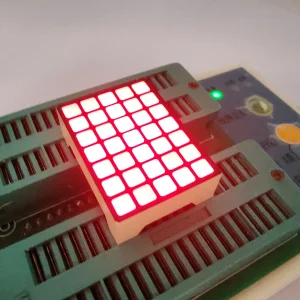
Our comprehensive product portfolio includes THT (Through-Hole Technology) LEDs, SMD/Chip LEDs, high-definition dot-matrix displays, customized LED backlights, and professional rigid and flexible linear light fixtures. Our facility spans 6,000 square meters, houses 8 fully automated high-speed SMT production lines, and is supported by a dedicated workforce of over 800 employees.
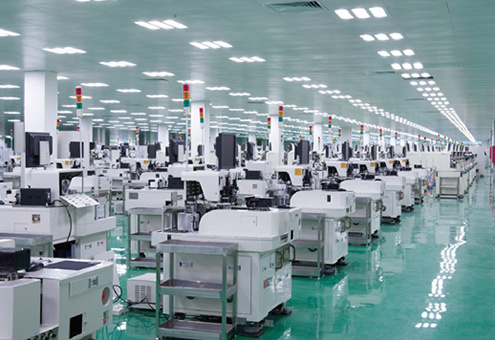
The global dominance of Chinese LED exporters is no longer driven solely by labor arbitrage, but by industrial clustering and advanced automation. Zhongshan's lighting ecosystem offers access to raw materials, sub-assembly manufacturing, optical housing extrusion, and testing laboratories. This ecosystem allows Zever Light to compress lead times for custom orders, delivering prototypes in 3 to 5 days and scaling to volume production in 1 to 2 weeks.
Our raw material procurement strategy emphasizes international quality compliance and supply chain safety. To ensure the performance of our rigid LED strips and displays, Zever Light imports and selects raw materials from trusted suppliers in the United States, Japan, South Korea, and Taiwan. Coupled with our enterprise ERP system, we track batch traceabilities from incoming raw materials to final QC delivery, maintaining reliable production yields.
Rigid LED strips are engineered for environments where mechanical stability, linear consistency, and high lumen output are required. Different installations present distinct environmental challenges:
Outdoor linear wall washers require IP66 to IP68 rating options. Solid aluminum casings combined with polyurethane or silicone potting protect components from moisture intrusion and thermal expansion stress.
Under-cabinet lighting and refrigerated showcases require high color rendering (CRI > 90) and low-temperature durability, ensuring food and luxury items are illuminated clearly without generating heat that spoils goods.
Production machinery, assembly lines, and warehouse racking require robust lighting systems that resist vibration, dust, and continuous operation cycles without needing regular replacement.
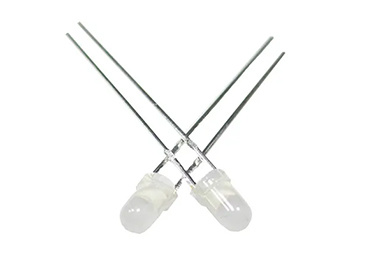
Quality is not an inspection step; it is integrated into the manufacturing process. At Zever Light, quality control protocols cover every phase of production. We use automated optoelectronic systems to screen and sort diodes, ensuring each rigid strip meets target lumen, voltage, and color bin parameters.
Every batch of rigid LED strips undergoes thermal cycling stress tests, being subjected to temperatures ranging from -40°C to +85°C to verify the solder joint integrity. This is followed by 100% active burn-in aging tests for 48 hours. Our test labs use integrating spheres to measure spectral distribution, verifying CRI, R9, and efficacy before packaging and shipping.
 Zever Light