In modern luminaire architecture, the light source is only as good as the system directing it. As solid-state lighting (SSL) technologies migrate towards higher lumen densities and lower power footprints, the optical component—specifically the LED reflector—serves as the primary mechanism for directional control, glare reduction, and beam shaping. Unlike omnidirectional legacy light sources, LEDs emit light in a specific vector (typically 120 degrees Lambertian), requiring secondary optics to bundle, direct, and transition the raw light into functional patterns.
High-efficiency LED reflectors are engineered to minimize optical losses while maximizing the "Useful Lumens" within a targeted space. The precision of a reflector determines the Unified Glare Rating (UGR), which is essential for projects demanding compliance with WELL Building Standards or LEED criteria. Selecting the correct manufacturer involves evaluating optical design simulations, tool fabrication thresholds, and surface metallization capabilities.
Utilizing high-end engineering software such as TracePro, LightTools, and ASAP, top-tier factories simulate millions of ray paths to optimize color-over-angle distribution and eradicate chromatic aberration prior to mold fabrication.
Aluminum physical vapor deposition (PVD) guarantees reflectance values exceeding 92%. A protective top-coat prevents oxidation, ensuring sustained performance under high operating temperatures.
By engineering complex micro-facets, standard reflectors are transformed into highly diffuse visual comfort systems, reducing glare and satisfying strict European indoor workplace lighting standards.
The concentration of LED reflector manufacturing in China is not merely a product of labor availability; it is the result of a highly integrated industrial ecosystem. Key regions like Guangdong (specifically Zhongshan, Shenzhen, and Dongguan) host massive clusters of specialized production units, supply networks, and raw material providers. This geographic proximity drastically cuts lead times and expedites iterative prototyping.
| Geographical Hub | Primary Industrial Specialization | Ecosystem Strengths | Target Export Markets |
|---|---|---|---|
| Zhongshan (Guzhen/Henglan) | Commercial, Residential & Decorative Lighting Fabrication | Unmatched sourcing of raw components, quick-turn prototyping, and assembly logistics. | Europe, North America, Middle East, Southeast Asia |
| Shenzhen & Dongguan | High-Precision Injection Molding & Optoelectronics | Advanced cleanroom molding, micro-optics, smart integration, and rapid automated testing. | North America, Japan, Western Europe |
| Ningbo & Hangzhou | Outdoor Luminaires, Die-Cast Aluminum Housings & Optics | Heavy industrial tooling, marine-grade anti-corrosive coatings, structural glass optics. | Northern Europe, Australia, South America |
For global buyers, this cluster system ensures that raw PC, PMMA, and high-purity aluminum alloys are sourced within hours of ordering. Furthermore, the availability of multi-axis CNC mold-making machinery within the same economic zone allows factories to shrink tool creation times from the standard 6 weeks down to 15-20 days, without sacrificing precision.
Established in 2005, Zhongshan Zever Light Co., Ltd. stands as a benchmark of engineering precision and supply chain reliability in the heart of China’s lighting capital. For nearly two decades, the company has consistently invested in advanced automated production equipment and state-of-the-art optical verification technologies to bridge the gap between design theory and mass-market deployment.
Zever Light occupies a modern 6,000 square meter facility operating under ISO9001 and ISO14001 certified management systems. With 8 high-capacity production lines and a workforce of over 800 highly skilled personnel, Zever Light guarantees not only scalability but absolute precision across all product classes. From THT and SMD/Chip LEDs to custom dot matrix modules and high-precision lighting fixtures, the company remains at the forefront of optoelectronic innovation.
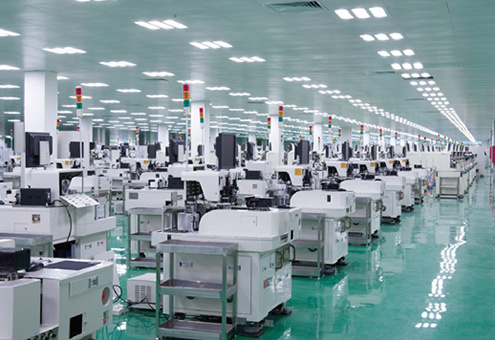
Figure 1: State-of-the-art Zever Light automated cleanroom facility
A core element of Zever Light's manufacturing philosophy is the strict sourcing of raw materials. To ensure exceptional optical clarity, thermal stability, and prolonged lifecycle profiles, materials are imported from trusted suppliers in Taiwan, the United States, Japan, and South Korea. All products strictly comply with RoHS and REACH directives, ensuring frictionless customs clearance and regulatory alignment in North American and European markets.
With an in-house R&D team consisting of 16 experienced engineers averaging more than 5 years in the optoelectronics and optical design sectors, Zever Light successfully supports both OEM and ODM requests. Using professional design systems and advanced thermal testing chambers, the team processes conceptual sketches, converting them into mechanical drafts, photorealistic optical simulations, and eventually physical, market-ready products.
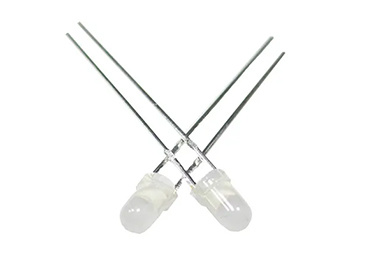
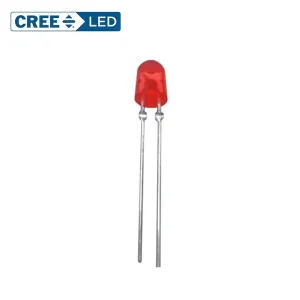
Standard T-1 LED Light Chip Technology Engineered by Zever Light
Modern reflector engineering dictates that material selection has a direct impact on thermal resistance, mechanical durability, weight, and optical performance. Sourcing teams must evaluate these characteristics based on target applications.
Polycarbonate is the industry standard for complex geometries and micro-faceted optical profiles. Through high-pressure injection molding, factories can produce high-volume, highly complex shapes with ultra-low tolerances. When paired with high-grade vacuum aluminum plating, PC reflectors achieve reflections up to 93% while remaining lightweight and shatterproof.
For high-bay installations, outdoor stadium lighting, or applications where operating temperatures exceed 120°C, pure aluminum reflectors (often 1060 or 1070 grade) are preferred. Using spinning or stamping processes followed by electrochemical anodizing or chemical polishing, these metal elements provide structural integrity and double as secondary heat sinks.
PMMA is selected for applications where optical clarity and UV resistance are paramount, and operating temperatures remain moderate (under 85°C). Often used in hybrid lens-reflector configurations (TIR optics), PMMA provides high light transmission (92%) and does not yellow over time under intense UV exposure.
Reflectors are not generic, one-size-fits-all components. The physical design, facet configuration, and coating material must be optimized for the specific application environment. Here is how advanced manufacturers tailor solutions for global markets:
Track lights and downlights require clean, sharp beam angles (15°, 24°, 36°) without halos or chromatic aberration to accurately highlight merchandise. Micro-faceted reflectors ensure high CRI rendering and comfortable, glare-free environments for shoppers.
Warehouses and manufacturing facilities require high optical efficiency at mounting heights over 8 meters. Anodized aluminum or metal-plated polycarbonate reflectors with 60° to 90° beam distribution patterns ensure maximum lux reaches the work plane.
Streetlights, wall washers, and floodlights face extreme humidity, salt spray, and UV exposure. Silicon-based protective coatings over vacuum-metallized layers or marine-grade anodized aluminum are mandatory to prevent oxidation.
As human-centric lighting (HCL) gains traction, dual-channel COB LEDs require specialized mixing chambers inside the reflector cavity to blend warm and cool light before it exits, avoiding color separation.
Sourcing optical parts from overseas requires strict quality verification at every stage of the manufacturing cycle. Since optical deviations of even 0.1mm can significantly alter beam angles and increase glare, premier manufacturers implement rigorous quality control protocols.
Before volume shipment, finished luminaires containing custom reflectors are evaluated in rotating darkroom goniophotometers. This process generates standardized IES/LDT files, giving lighting designers access to verifiable polar curves, lumen distribution metrics, and efficiency data.
LED reflectors are placed adjacent to high-power LED modules, exposing them to continuous temperatures between 85°C and 110°C. Environmental chambers verify that plastic substrates do not warp, distort, or experience yellowing, and that metallized coatings do not peel.
By measuring total hemispherical reflectance, specular reflectance, and diffuse scatter, technicians ensure the metallization process consistently achieves the required reflectivity targets across every batch.
 Zever Light